


Professionals across industries often struggle to communicate effectively within organizations. Many find themselves drafting lengthy emails or unclear messages that fail to prompt timely responses. Whether aiming to align departments, announce new initiatives, or address policy changes, the challenge lies in conveying information concisely while inspiring action. An unclear or poorly structured business memo can lead to confusion, delays, or even costly misinterpretations.
Experienced communication specialists recognize the memo as one of the most powerful tools for internal communication. This guide provides a complete, modern framework for creating a business memo that maintains professional tone, supports decision-making, and enhances credibility within any organization. The topic, business memo, will be explored in depth to help employees, managers, and executives craft messages that achieve their intended goals while reflecting professionalism and leadership.
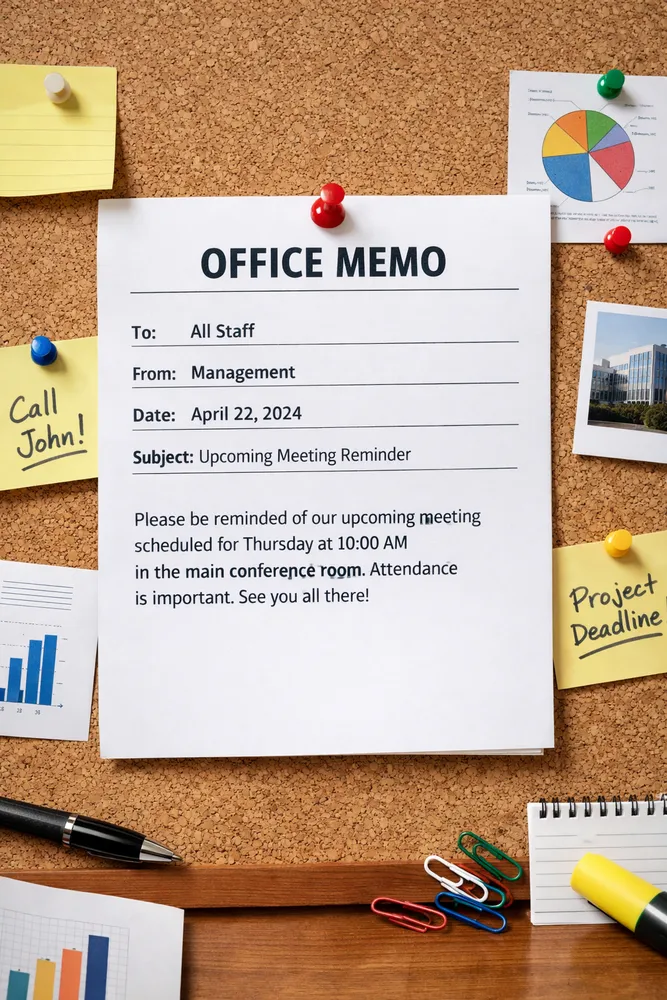
Understanding the Purpose of a Business Memo
A business memo, short for memorandum, is an internal communication document used to inform, request, or persuade employees or colleagues within a company. Unlike informal messages, memos adhere to a structured, factual, and results-oriented tone. They are essential for driving organizational alignment, reinforcing accountability, and documenting key communications across departments.
Organizations rely on business memos for purposes such as policy updates, project launches, meeting announcements, process improvements, and employee recognition. The concise nature of a memo ensures that critical points stand out, minimizing ambiguity and ensuring consistency across teams. The U.S. Office of Personnel Management and the Society for Human Resource Management emphasize clarity and conciseness as hallmarks of effective internal communication, two principles perfected through memos.
Every business memo shares core objectives:
- Inform stakeholders about new policies, updates, or events.
- Request action, resources, or input from a specific audience.
- Persuade employees to support initiatives or adopt new processes.
- Document business decisions, ensuring transparency and accountability.
Effective business memos often share certain traits: a direct subject line, factual tone, brevity without omission, and a clear call to action. These characteristics ensure stakeholders immediately understand what is required of them. Given that modern workplaces depend increasingly on asynchronous communication, writing a precise memo has never been more essential.
Anatomy of a Well-Written Business Memo
A business memo is more than a formality—it’s a communication tool designed to deliver clarity, direction, and impact. When written effectively, it ensures that information flows smoothly across teams and departments, reducing misunderstandings and driving results. Below is the proven structure every professional should follow.
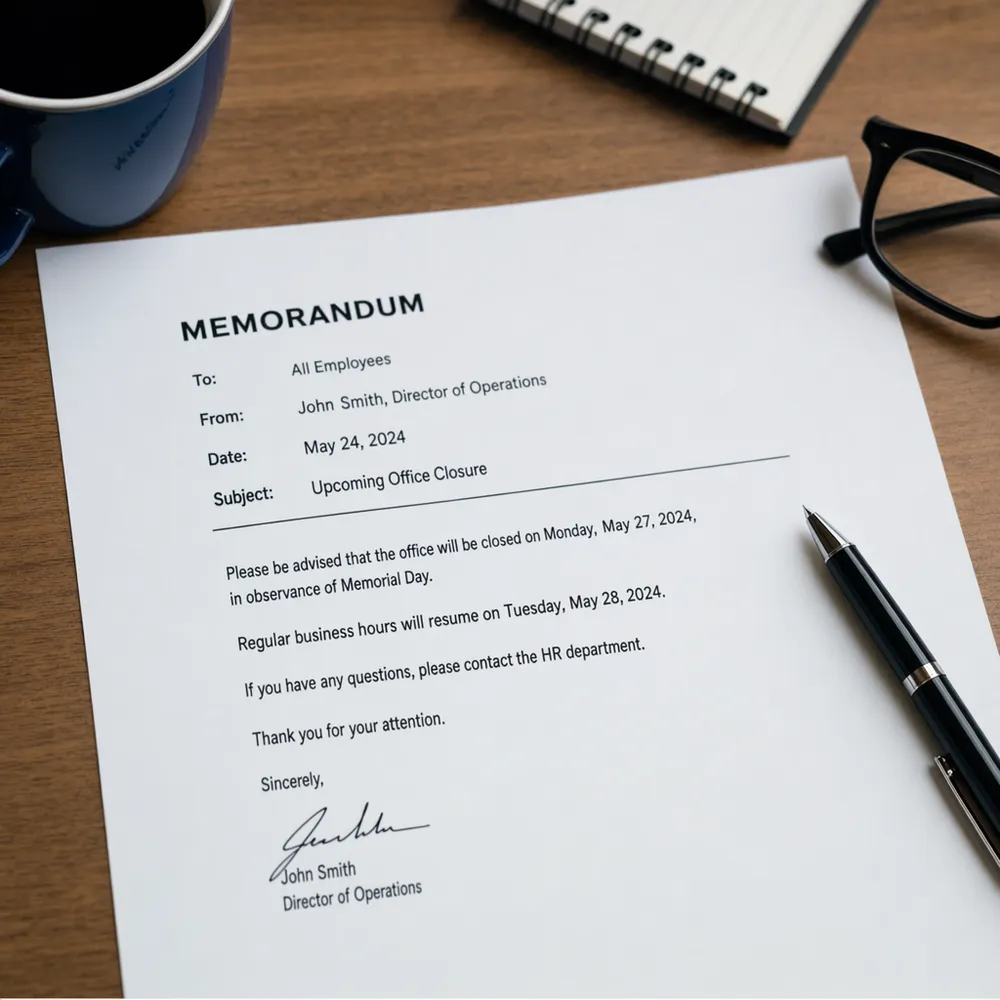
- Header: The header includes “To,” “From,” “Date,” and “Subject.” It quickly identifies recipients and the memo’s purpose. For broad circulation, listing department names or groups instead of individuals streamlines delivery.
- Opening: The opening paragraph states the memo’s purpose directly. Clarity at the beginning ensures immediate focus on the objective, whether announcing, requesting, or informing.
- Context or Background: This section provides essential information leading to the topic. It explains the rationale for the message, helping recipients understand causes, implications, or history.
- Discussion or Body: Here, details and reasoning support the message. Using bullet points, subheadings, or numbered lists enhances skimmability. Each paragraph should discuss only one idea to ensure clarity.
- Conclusion and Call-to-Action: The closing paragraph summarizes key points and specifies desired actions or responses. If deadlines or follow-ups are expected, they should be clearly stated.
Each memo format can be adjusted according to the audience hierarchy. For instance, executives typically appreciate succinct, data-backed insights, while project teams value actionable specifics. Maintaining professional alignment throughout ensures comprehension across organizational levels.
Choosing the Right Tone and Style
A successful business memo strikes a balance between authority and accessibility. While it should maintain a professional tone, it must also be human and relatable. Excessive formality can obscure intent, while informality risks undermining credibility. The right tone depends on corporate culture, audience, and message urgency.
For complex organizations, consistency of tone establishes trust. The language must align with brand voice guidelines and communication standards. Senior leaders should adopt assertive yet respectful phrasing, whereas internal memos to peers might use collaborative language that emphasizes shared responsibility and teamwork.
- Use plain language—avoid jargon that alienates non-specialized audiences.
- Adopt active voice—promote directness and accountability.
- Maintain brevity—eliminate filler and redundant terms.
- Incorporate positive phrasing—motivate engagement and encourage compliance.
- Ensure neutrality—for sensitive or compliance-driven updates, neutrality ensures professionalism while commanding attention.
When memos include data or policy directives, tone neutrality ensures professionalism while commanding attention. For sensitive cases such as organizational restructuring or compliance matters, empathy can coexist with firmness to preserve morale.
Formatting Best Practices for Readability
In an era dominated by digital screens, proper formatting defines how efficiently recipients engage with a memo. Visual hierarchy enhances comprehension, allowing readers to navigate information quickly. Memos should be formatted to highlight key points without overwhelming readers with dense text.
- Font selection: Professional sans-serif fonts like Arial or Helvetica ensure clarity across devices.
- Spacing: Maintain one-inch margins and uniform line spacing for visual consistency.
- Headings and Subheadings: Organize content logically; subtopics should be bold or italicized for visibility.
- Bulleted or Numbered Lists: Break complex details into digestible segments.
- Paragraph Length: Use short paragraphs (3–5 lines) to promote readability.
Proper formatting contributes to efficiency by minimizing cognitive load. In large corporations where information overload is common, ease of consumption can determine whether employees act on directives promptly. Choosing readable text styles and consistent layouts reflects organizational maturity and respect for employee time.
Examples of Common Business Memos
Business memos appear in nearly every professional setting. Understanding their application across situations enables employees at all levels to adapt templates quickly. Below are common memo types and their organizational purposes.
| Memo Type | Primary Purpose |
|---|---|
| Informational Memo | Announces changes, policy updates, or upcoming events. |
| Request Memo | Asks recipients for approval, data, or participation in projects. |
| Confirmation Memo | Summarizes verbal agreements, meetings, or approvals. |
| Directive Memo | Provides instructions or policy mandates from leadership. |
| Persuasive Memo | Encourages support for initiatives, proposals, or process changes. |
Each memo type should follow organizational tone and be supported with precise details. For example, an informational memo regarding hybrid work arrangements should include implementation dates, resources, and escalation paths for inquiries.
Steps for Writing a Business Memo
Experienced communicators follow a strategic process that ensures business objectives align with written clarity. The following steps summarize how professionals can create a memo that inspires confidence and action.
- Define the Purpose: Determine whether the memo is meant to inform, request, or persuade. Align tone and structure with the intent.
- Identify the Audience: Understanding recipients’ roles ensures relevance and respect for their time.
- Gather Essential Facts: Verify dates, numbers, and sources before drafting. Accuracy reinforces credibility.
- Draft the Message: Begin with purpose, provide context, then outline key information logically.
- Refine Tone and Structure: Adjust readability using active voice, consistent terminology, and parallel sentence structure.
- Review for Clarity: Conduct a peer review or managerial approval to confirm accuracy.
- Distribute Efficiently: Send the memo through approved internal platforms or intranets to ensure accessibility.
Clarity in organization and message sequencing enhances credibility within operations. Readers rely on predictability, which an orderly format supports. Well-crafted memos eliminate unnecessary back-and-forth emails, improve decision velocity, and document organizational accountability.
Common Mistakes to Avoid in Business Memos
Even experienced professionals occasionally make errors that undermine corporate communication. Recognizing these pitfalls prevents misinterpretation and reinforces trust in leadership communications. The most frequent issues include vagueness, lack of structure, and poor proofreading.
- Unclear Purpose: A memo lacking direct objectives confuses employees and reduces compliance.
- Overly Technical Language: Excessive jargon limits comprehension and alienates readers.
- Ignoring Formatting Standards: Inconsistent fonts or headers appear unprofessional.
- Failing to Include a Call-to-Action: Without direction, memos lose effectiveness.
- Improper Tone: Being too casual or too strict may distort intent.
- Insufficient Proofreading: Errors signal carelessness, which weakens authority.
To maintain professionalism, each memo should be reviewed from the reader’s perspective. This approach identifies gaps in understanding before dissemination. Forward-thinking organizations often integrate review stages in communication workflows to guarantee consistency.
Leveraging Digital Tools to Improve Memo Writing
Modern organizations increasingly rely on digital platforms for internal communication. From collaborative suites like Microsoft 365 to AI-assisted drafting tools, technology simplifies memo creation and improves accuracy. Templates, version tracking, and feedback systems enable consistency while maintaining speed in message approvals.
Some enterprise systems allow tracking of memo engagement metrics, showing open rates and read confirmations. These data points help managers assess whether employees received and understood critical messages. For large-scale communications such as HR policy rollouts, analytics form part of compliance reporting.
- Document Collaboration: Online editing and shared workspaces eliminate version confusion.
- Template Libraries: Corporate templates ensure adherence to company branding and tone.
- Automation Tools: Automated approval workflows accelerate distribution.
- Grammar and Readability Checkers: Tools like Grammarly or Microsoft Editor ensure polished communication.
- Accessibility Review: Features like screen-reader optimization promote inclusivity.
With the growing adoption of hybrid work environments, digital platforms magnify the importance of structured, readable memos. Employees across time zones depend on clearly formatted documents that communicate instructions effectively without real-time clarification.
Enhancing Professional Reputation Through Strong Writing
Professionals who master memo writing often gain reputations as precise thinkers and effective communicators. Within corporate hierarchies, clear writers frequently become trusted voices for decision documentation. Consistency in tone, formatting, and delivery signals leadership readiness and attention to detail.
Written communication, particularly in structured forms like memos, reinforces credibility when addressing senior management or cross-functional audiences. As companies value transparency and documentation amid regulatory expectations, proficiency in writing clear memos directly correlates to organizational influence.
In human resource management, many executives evaluate communication competence through internal correspondence. Structured, polished memos therefore not only improve internal coordination but also contribute to career advancement.
Building a Culture of Clear Communication

High-performing organizations view internal communication as a strategic advantage. Encouraging standard memo formats ensures organizational fluency regardless of department or generational differences. Corporate training programs that teach memo writing empower employees to document actions efficiently and maintain workplace harmony.
When leadership sets expectations for clarity and brevity, employees mirror those standards. Over time, this practice cultivates organizational coherence and improved accountability. Consistent business memo usage can reduce misunderstandings, enhance collaboration, and create documented histories of operational decisions that align with audit-readiness principles.
Strengthen Workplace Communication Skills Today
Writing business memos effectively requires a blend of clarity, structure, and professionalism. A memo that informs, requests, or persuades with precision demonstrates leadership competence and organizational value. For professionals aspiring to strengthen their written communication and career presence, developing this skill remains essential. Many enhance overall impact with professional resume writing help that reinforces messaging consistency and elevates professional branding across communications.
Frequently Asked Questions
What is the primary purpose of a business memo?
The main purpose of a business memo is to communicate important information, requests, or instructions within an organization. It serves as a concise document that ensures recipients clearly understand objectives, timelines, or updates relevant to business operations.
How long should a standard business memo be?
A well-structured business memo should generally range from one to two pages, depending on the complexity of the subject. The document must be long enough to present all necessary facts but short enough to remain easily readable in one sitting.
What language style makes a business memo effective?
An effective memo uses clear, direct, and active language. Sentences should be free from excessive jargon, and tone should match organizational formality levels. Using plain business English and a consistent structure ensures professional readability.
When should employees use a business memo instead of an email?
Employees should use a business memo when addressing formal topics such as policy changes, directives, or company-wide updates that require permanent documentation. Memos ensure accountability and clarity, whereas emails are better suited for informal or one-on-one communication.
Can a business memo include visual elements like charts?
Yes. When relevant, charts or tables can clarify data-driven points. Visual elements improve interpretability, especially in memos discussing performance metrics, timelines, or compliance updates. However, formatting should remain clean and accessible for consistent readability.