


Great customer service has become a critical benchmark for career growth and organizational success. It’s no longer enough to deliver tasks efficiently—employers want professionals who can transform routine interactions into experiences that build trust, loyalty, and measurable results. In roles where empathy, communication, and consistency drive outcomes, hiring managers look for candidates who understand how service connects directly to business value.
This guide draws on expertise in employment trends and EEAT‑compliant career content to clarify how exceptional service is measured in today’s workplace. Designed for job seekers, supervisors, and professionals in customer‑centric fields, it explains what does great customer service mean in practice: delivering value, strengthening relationships, and advancing both individual careers and organizational performance.

What Does Great Customer Service Mean
Great customer service is more than fixing problems. It’s the heartbeat of an organization’s culture, values, and long‑term vision. It’s proactive, emotionally intelligent, and designed to build trust that lasts. Professionals who understand what does great customer service mean don’t just react; they anticipate needs, close gaps between expectations and delivery, and create experiences that strengthen loyalty.
In today’s U.S. job market, service quality directly shapes retention and reputation. Data from the American Customer Satisfaction Index (ACSI) shows industries with higher satisfaction scores enjoy stronger repeat patronage and greater financial stability. Companies that invest in service training and empower employees to communicate effectively consistently outperform competitors in client loyalty and growth.
Exceptional service is defined by consistent behaviors that elevate every interaction:
- Accountability – owning problems and delivering solutions
- Transparency – building trust through honest communication
- Adaptability – adjusting quickly to evolving customer needs
- Attentiveness – listening actively and responding with care
- Empathy – treating every client with respect and compassion
When these traits are practiced daily, they create a culture of care and trust—a powerful differentiator in competitive industries.
Core Elements of Great Customer Service
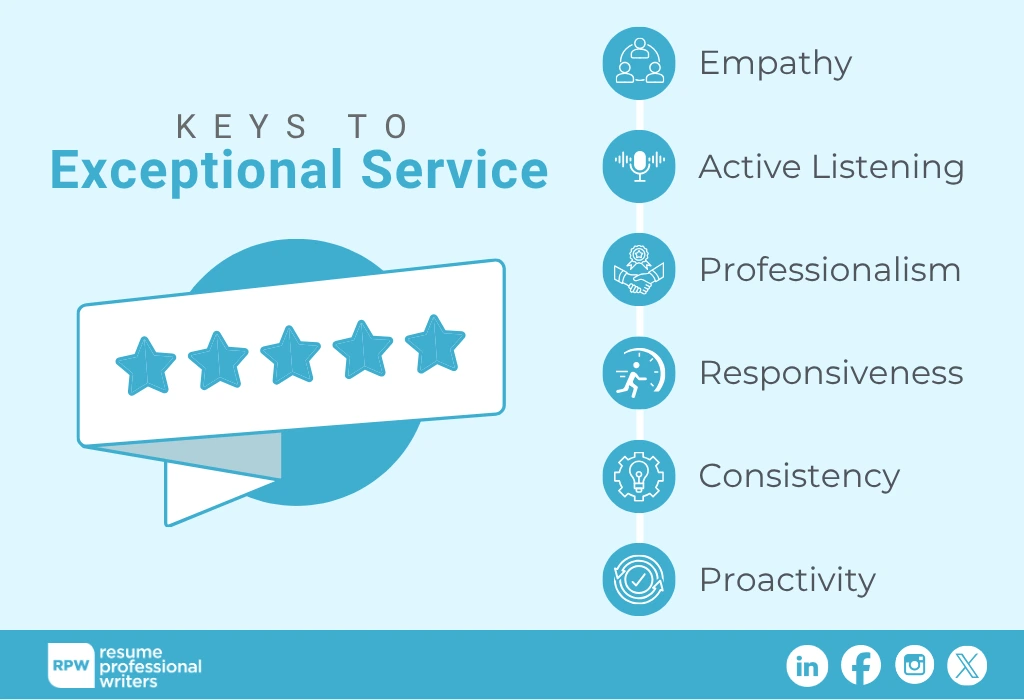
The defining characteristics of great service remain consistent across business models. Whether in healthcare facilities, federal offices, or corporate help desks, service excellence integrates empathy, active listening, professionalism, and efficiency. Each pillar supports the next, building a seamless customer experience that drives satisfaction and loyalty.
• Empathy
Effective service professionals identify with customers’ emotions and see situations from their perspective. Genuine empathy fosters trust, turning potentially negative experiences into opportunities for connection.
• Active Listening
By allowing customers to communicate fully without interruption, representatives convey respect and gather critical context before responding with solutions.
• Professionalism
Consistent tone, courteous body language, and conflict management skills ensure that each customer perceives the organization as reliable and respectful.
• Responsiveness
Swift acknowledgment of inquiries signals reliability. The speed of resolution directly affects perceived competence and overall satisfaction.
• Consistency
Great service does not fluctuate by time of day or staff member involved; it remains dependable under any circumstance.
• Proactivity
Anticipating needs before they arise allows staff to eliminate friction points and cultivate enduring loyalty.
By aligning these principles with structured communication training, companies reduce escalations, increase Net Promoter Scores, and enhance their workforce’s professional credibility. Great service happens when every employee takes ownership of the customer journey, ensuring each point of contact reinforces reliability and care.
The Role of Emotional Intelligence in Service Excellence
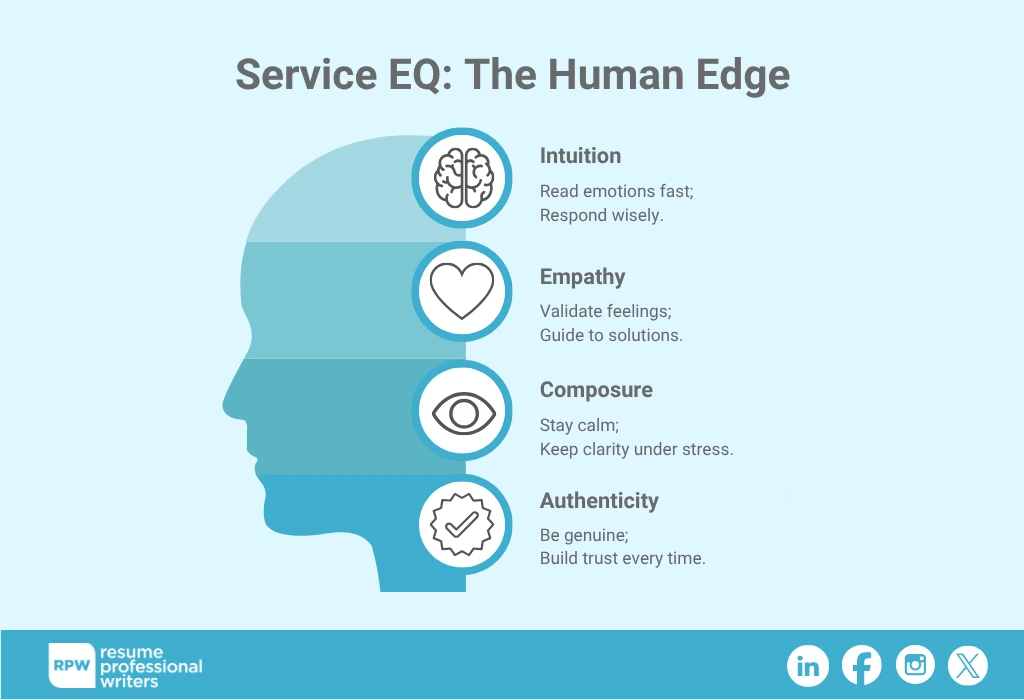
Delivering great customer service requires more than technical skill—it demands emotional intelligence. Employees with advanced emotional intelligence build stronger connections, manage stress with composure, and adapt seamlessly to difficult interactions.
Key behaviors that define emotionally intelligent service include:
- Intuition: This competency involves recognizing personal emotional triggers while intuitively interpreting customer tone and sentiment.
- Empathy: Customer service professionals regulate their emotions and demonstrate empathy to acknowledge customer concerns, validate customer feelings, and guide conversations toward resolution.
- Composure: When tensions rise—whether from delays, misunderstandings, or billing disputes—they maintain calm focus and provide clarity in outlining next steps.
- Authenticity: Emotionally intelligent professionals demonstrate genuine care and transparency that prevent conflicts, reinforces trust, and strengthens customer relationships, specifically in sectors like healthcare and social services, where emotions often run high.
Organizations that train staff to respond to customer concerns, while showcasing these behaviors, gain reputational advantages and long‑term client loyalty.
Customer Service Across Industries
While foundational principles remain universal, each industry presents unique demands and service expectations. Tailoring service to these contexts is what separates average performance from outstanding leadership.
Service Expectations per Industry
| Industry | Service Focus |
|---|---|
| Healthcare | Empathy, confidentiality, and patient education |
| Information Technology | Technical accuracy, proactive troubleshooting, data protection |
| Education | Communication clarity, constructive feedback, inclusivity |
| Retail | Product expertise, speed, and conflict resolution |
| Finance | Transparency, compliance, security assurance |
Employers often evaluate candidates based on how well their previous roles demonstrate adaptability, attention to detail, and communication consistency relative to industry norms:
- In the healthcare field, accuracy, empathy, and privacy define success.
- IT professionals must blend technical expertise with transparent communication and patience.
- For education, responsiveness and positive reinforcement are essential to maintaining productive relationships with parents and students.
Job seekers applying to service-oriented professions should align their interview responses with these standards to prove their awareness of these norms and professional readiness.
Examples of Great Customer Service in Action
Great customer service is more than a polite interaction—it’s a strategic advantage that shapes loyalty, company branding, and success. Here are real‑world cases that illustrate how great customer service transforms business outcomes:
• Airlines
Leading airlines empower their employees to adapt policies in real time, offering flexible solutions that reduce complaint ratios and strengthen passenger loyalty. By giving their staff the authority to resolve issues directly, they transform potential frustrations into positive experiences that build long‑term trust.
• Technology Retailers
The technology sector distinguishes itself by offering personalized consultations that go beyond transactional support. These tailored interactions consistently strengthen customer relationships, boost retention rates, and position brands ahead of competitors in an increasingly crowded marketplace.
• Hospitality
In hospitality, teams are trained to implement real‑time feedback systems to resolve issues before they escalate, preventing nearly 90% of minor grievances from turning into damaging public reviews. By addressing concerns instantly, they safeguard their reputation and reinforce customer trust.
• Hotels
Hotels excel when they respond swiftly to service disruptions. Offering complimentary upgrades or expedited assistance transforms inconveniences into loyalty‑building moments, turning potential dissatisfaction into memorable experiences that strengthen long‑term guest relationships.
These real-world examples reveal the common service principle that drives organizational success: owning the customer’s problem as if it were personal. Companies recognized for service excellence consistently employ initiatives such as:
- Strong feedback cultures that encourage frontline insights to keep leadership connected to customer sentiment.
- Continuous improvement programs that ensure problems are resolved while documenting recurring issues for systemic solutions.
- Performance metrics tied to satisfaction outcomes that motivate every department to treat customer engagement as a shared business objective, not an isolated task.
Customer Service as a Career Skill
Great customer service is no longer a “nice‑to‑have” soft skill. Professionals across all experience levels and industries increasingly recognize it as a transferable skill critical to career advancement, reputation, and measurable success.
Understanding what does great customer service mean begins with recognizing the career‑defining benefits it delivers:
- Enhances Employability: Hiring managers consistently rank great customer service, along with interpersonal communication, problem-solving, and empathy, among the in-demand soft skills. Whether an engineer resolving client issues or an administrator assisting public inquiries, the ability to ensure satisfaction impacts both personal reputation and operational success.
- Strengthens Leadership: Exceptional service builds pathways to leadership. Supervisors who model empathy and responsiveness inspire greater team loyalty, commitment, and stronger team performance.
- Expands Digital Value: As organizations digitize and employee-client interactions expand through virtual channels, customer service skills gain even greater value. Professionals with a mastery of clear written correspondence, tone management, and cross-cultural sensitivity enhance their marketability across virtual environments and diverse industries.
- Accelerates Career Growth: For entry-level professionals, demonstrating customer service competence can offset limited technical experience. For managers, it signals adaptability, discipline, and readiness for advancement.
Great service habits position professionals as reliable, empathetic, and brand‑aligned. Honing customer service skills is no longer optional—it’s a defining element of professional branding and a cornerstone of leadership identity.
Integrating Technology Without Losing the Human Touch
Automation, artificial intelligence, and self-service platforms redefine modern customer interactions. These technologies accelerate resolution times, but speed alone does not answer the deeper question: what does great customer service mean in today’s digital age? Customers still seek empathy and assurance from human connection.
Businesses that combine digital convenience with personal engagement outperform those relying solely on automated systems. The following principles highlight how technology and empathy work together to define service excellence:
- Efficiency with Empathy: AI-powered chatbots can deliver quick, accurate responses to routine requests but must be complemented by accessible, empathetic staff who can step in for complex situations, offering reassurance and personalized solutions.
- Trust through Proven Results: According to Qualtrics’ recent customer experience studies, consumers increasingly value hybrid support models—where digital precision meets interpersonal care. This balance proves that great service adapts to innovation while preserving its human foundation.
- Insight with Analytics: Training programs that teach employees how to interpret digital analytics alongside emotional cues ensure customer data serves as guidance—not replacement—for human insight.
When technology enhances responsiveness without alienating empathy, organizations elevate service quality, strengthen trust, and boost workforce morale.
Building a Culture of Service Excellence
Great customer service originates with a culture that empowers employees and sustains excellence through clear systems and measurable practices. Organizations can’t achieve consistent excellence without structurally supporting their teams. The following elements define strong service cultures:
- Ongoing Training: Continuous skill development equips employees to deliver confident, consistent service.
- Clear Escalation Frameworks: Structured pathways ensure issues are resolved quickly and prevent customer frustration.
- Recognition Systems: Rewarding empathy‑driven outcomes motivates staff to prioritize authentic care.
- Frontline Feedback Channels: Direct input keeps leadership connected to real customer sentiment.
- Analytics-driven Performance Metrics: Measuring outcomes allows leaders to quantify impact while reinforcing qualitative expectations.
Companies that prioritize service from within retain both their staff and clients longer. A positive workplace climate leads to authentic customer interactions, which translate to brand loyalty. Enthusiastic teams translate enthusiasm directly into client engagement—a principle especially evident in hospitality, healthcare, and public administration industries.
Transforming Customer Service into Career Opportunity
Professionals aiming to stand out in competitive hiring environments benefit from clearly articulating how their service mindset impacts measurable business success. Hiring committees value concrete examples illustrating problem resolution, team coordination, and recognition from clients or supervisors.
To showcase this effectively, candidates should focus on the following resume writing strategies:
- Quantify Impact: Highlight metrics such as satisfaction score increases, reduced resolution times, or process improvements.
- Show Recognition: Include awards, commendations, or positive feedback from clients and supervisors to build credibility.
- Emphasize Advocacy: Position yourself as a customer champion who builds loyalty and retention through empathy and communication.
- Highlight Collaboration: Showcase cross‑functional teamwork that strengthens operational integrity and streamlines processes.
Job seekers who translate service‑driven impact into clear, quantifiable achievements secure interviews faster and advance more confidently.
Service Mindset as a Professional Differentiator
The ability to define and demonstrate great customer service reflects more than interpersonal courtesy—it reveals a candidate’s philosophy toward business relationships and operational excellence. Employers value professionals who transform service challenges into growth opportunities. Developing this mindset requires practice, mentorship, and a foundation built on communication ethics and empathy.
Many professionals enhance this skillset—and their career presentation overall—by collaborating with professional resume writers who emphasize customer engagement achievements and strategic value alignment in their documents.
Frequently Asked Questions
What are examples of great customer service?
Examples include addressing a client’s issue before they escalate it, offering personalized assistance, or providing follow-up communication after problem resolution. Companies like Amazon and Zappos are well-known for empowering representatives to exceed expectations by acting quickly, showing empathy, and treating each case uniquely.
How does great customer service impact business performance?
Service excellence directly correlates with customer retention and revenue. According to PwC’s consumer intelligence reports, 86% of buyers would pay more for better customer experience. Companies that maintain consistent and empathetic service often experience increased loyalty and long-term profitability.
What skills define a strong customer service professional?
Key skills include active listening, adaptability, empathy, conflict resolution, and communication clarity. These attributes enable professionals to create positive emotional experiences for customers, enhancing organizational credibility and customer satisfaction simultaneously.
Why is emotional intelligence essential in customer service?
Emotional intelligence allows service professionals to interpret tone, understand unspoken concerns, and manage stress effectively. Representatives who demonstrate emotional control and empathy resolve issues more efficiently while maintaining the customer’s trust and comfort.
How can job seekers highlight customer service skills on a resume?
Job seekers should showcase metrics that reflect impact, such as improved satisfaction scores or reduced response time. Including testimonials, awards, or client feedback strengthens credibility. Strategic phrasing of achievements ensures that hiring managers recognize customer service as a core professional competency.