


Job seekers often ask: what does a sales associate do? The answer goes far beyond ringing up purchases—it’s about mastering customer service, product knowledge, and sales performance metrics that employers value most.
Whether you’re breaking into retail or shifting from another industry, the role’s expectations are broader than they first appear. Success requires balancing people skills with measurable results and knowing how to present both on resumes and in interviews.
This guide delivers clarity. It breaks down the duties, qualifications, and career growth opportunities for sales associates across sectors. From salary trends to advancement strategies in 2026, you’ll find a complete overview of what a sales associate does—empowering entry‑level professionals, career changers, and retail hopefuls to position themselves with confidence.

Understanding the Role of a Sales Associate
A sales associate serves as the front-line representative of a company’s brand, interacting directly with customers to drive revenue and ensure satisfaction. This position is critical in retail, technology, automotive, and service-based industries, where building rapport and influencing purchasing decisions contribute significantly to success. The sales associate bridges product knowledge and customer needs, ensuring each interaction results in a positive buying experience.
In modern retail environments, sales associates perform far more than simple transactions. They embody brand culture, handle product merchandising, track inventory, and manage point-of-sale operations. Their approach helps shape customer loyalty and repeat business — two primary indicators of retail profitability. Because the U.S. Bureau of Labor Statistics lists retail salespersons among the largest occupational groups, the competition for these roles remains consistent year-round.
The position also extends across various specialized areas: technology providers, apparel stores, furniture showrooms, automotive dealerships, and healthcare equipment suppliers—each demanding unique communication, technical, and product skills. Yet the core objective remains universal: converting prospects into customers while maintaining brand reputation and operational excellence.
Primary Responsibilities of a Sales Associate
A sales associate’s daily work extends beyond merely selling products. The position blends sales strategy, operational support, customer engagement, and administrative precision. Each duty contributes to achieving individual and team targets while promoting brand consistency. The following outlines the primary categories of responsibilities that define the profession.
• Customer Engagement
Sales associates greet customers, assess their needs, and guide them through available products or services. This involves active listening, empathy, and responsiveness to ensure positive shopping experiences.
• Sales Transactions
Handling cash registers, processing payments, issuing receipts, and ensuring accurate pricing are fundamental. Modern associates also manage digital systems for mobile checkout and loyalty programs.
• Merchandising and Presentation
Visual displays influence buying behavior. Associates restock shelves, maintain store cleanliness, and adhere to corporate planogram standards to enhance product appeal.
• Product Knowledge
Successful associates master detailed product features, benefits, warranty terms, and cross-selling opportunities. This expertise supports confident and credible selling behavior.
• Inventory Control
They monitor stock levels, coordinate with warehouse teams, and update inventory management systems to prevent discrepancies or backorders.
• Upselling and Cross-Selling
Identifying opportunities to recommend complementary products increases average purchase values and improves revenue per visitor.
• Customer Feedback Management
Associates record customer concerns or suggestions and relay them to management to drive continuous improvement and refine sales strategies.
Retail organizations value associates who maintain composure under pressure, adapt during seasonal fluctuations, and consistently deliver reliable performance metrics. These professionals anchor the customer experience, acting as brand ambassadors in every transaction they facilitate.
Required Skills and Competencies
Sales associates combine technical, interpersonal, and cognitive skills to meet diverse workplace expectations. The role heavily depends on soft skills—particularly communication and relationship-building—while also demanding attention to operational precision. Employers prioritize candidates who display enthusiasm, reliability, and the ability to learn quickly from market trends.
1. Communication Skills
Clear articulation and active listening are vital to connecting with customers and translating their needs into practical product suggestions.
2. Customer Service Mindset
A genuine desire to help others ensures satisfaction and generates repeat business.
3. Problem-Solving
Associates frequently resolve product issues and handle escalations, requiring critical thinking and diplomacy.
4. Adaptability
Retail hours vary, and associates must adjust to sales peaks, promotional events, or product rollouts without compromising performance.
5. Detail Orientation
From price accuracy to stock counts, precision safeguards brand integrity and financial reliability.
6. Team Collaboration
Working harmoniously with colleagues improves sales flow and guarantees operational consistency, especially during peak hours.
7. Technical Proficiency
Familiarity with point-of-sale (POS) systems, digital CRM tools, and inventory databases strengthens efficiency in modern environments.
Developing these skills not only boosts sales metrics but also accelerates advancement to supervisory or brand specialist roles. Continuous improvement and product training remain hallmarks of successful sales teams in 2026.
Common Work Environments and Industries
The versatility of the sales associate position allows professionals to thrive across retail, business-to-business (B2B), and service sectors. Each environment presents distinct expectations in terms of pace, sales strategy, and customer relationship management. Understanding these variations helps job seekers align their strengths with optimal work settings.
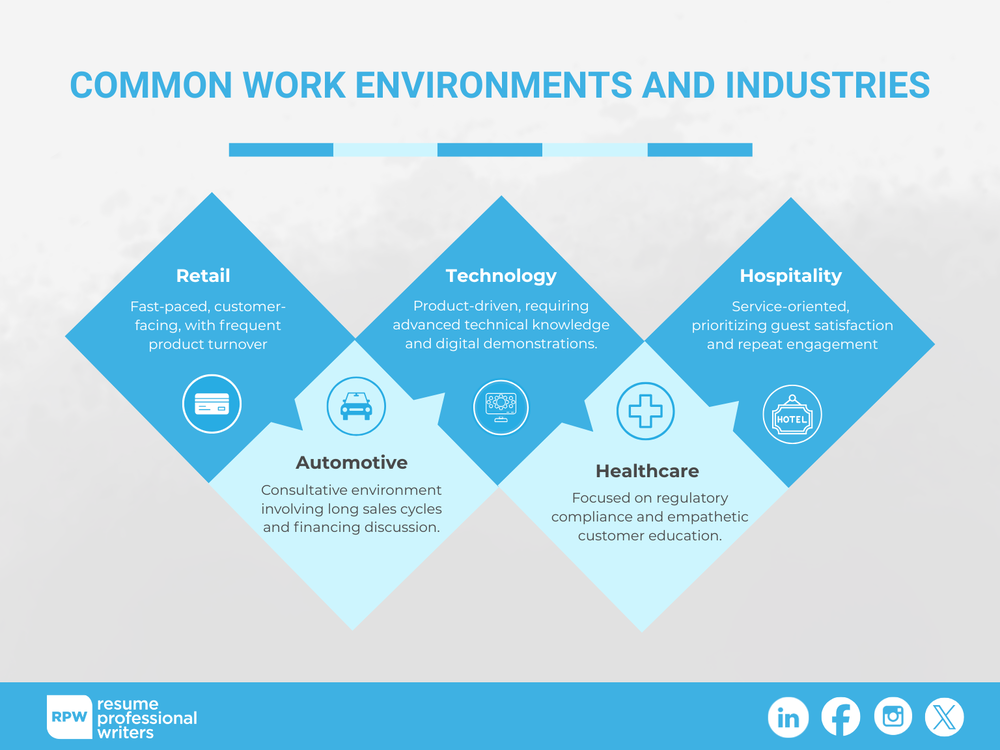
Beyond storefronts, sales associates now contribute significantly to online and hybrid marketplaces. Many employers integrate omnichannel processes, requiring associates to assist customers with mobile devices, virtual shopping assistance, or digital checkouts. This model reinforces the importance of digital literacy and adaptable communication styles.
Education, Certifications, and Advancement
While most sales associate roles do not require formal degrees, employers often prefer candidates with a high school diploma or equivalent. However, structured training programs significantly influence job readiness and long-term growth potential. Sales training, retail management coursework, or certification in customer relationship management software enhances employability.
• Relevant Education
Coursework in marketing, communication, or business administration builds foundational sales and negotiation skills.
• Certifications
Credentials such as the National Retail Federation’s Retail Management Certificate or sales enablement programs demonstrate professional development commitment.
• On-the-Job Training
Employers typically offer onboarding programs covering product knowledge, point-of-sale technology, and customer interaction strategies.
• Career Pathway
With experience, sales associates advance to senior positions like Lead Associate, Sales Supervisor, or Store Manager, often earning performance-based bonuses along the way.
In addition, associates in technology or medical equipment sectors may pursue niche certifications that deepen product expertise. Those seeking long-term career stability frequently transition into roles in account management, marketing, or operations leadership—demonstrating upward mobility within dynamic industries.
Compensation and Job Outlook
Compensation for sales associates often combines base hourly pay with commissions, bonuses, or incentives. According to the U.S. Bureau of Labor Statistics, the median annual wage for retail sales workers currently exceeds $34,000, with higher earnings in luxury retail, automotive sales, and technology sectors. Part-time employment remains widely available, providing flexibility for students and seasonal workers.
Work schedules generally include evenings, weekends, and holidays, especially in consumer-focused markets. However, career prospects remain steady due to consistent demand and the expanding digital sales landscape. Growth opportunities abound as brick-and-mortar stores integrate e-commerce tools, requiring adaptable professionals who can perform seamlessly across both in-store and online sectors.
| Experience Level | Average Annual Earnings (U.S.) |
|---|---|
| Entry-Level (0-1 year) | $30,000 – $34,000 |
| Mid-Level (2-5 years) | $35,000 – $45,000 including commissions |
| Experienced Associates / Team Leads | $45,000 – $60,000 depending on industry |
Strong sales performance, exceptional customer service, and leadership initiatives contribute to higher earning potential. Advancement opportunities also expand in response to retail digitization and market analytics integration.
Strategies for Excelling as a Sales Associate
Top-performing sales associates consistently demonstrate a mix of technical knowledge, interpersonal effectiveness, and measurable productivity. Their success often stems from combining emotional intelligence with disciplined sales techniques. Building rapport and exceeding expectations anchors their contributions across industries.
1. Master Brand Knowledge
Deep understanding of product specifications equips associates to explain value differentiators confidently.
2. Prioritize Customer Relationships
Maintaining authenticity during interactions builds long-term trust and loyalty that support retention goals.
3. Leverage Data Tools
Using customer relationship management (CRM) platforms and analytics helps track preferences, enabling targeted recommendations.
4. Exceed Sales Metrics
Continuous goal tracking motivates performance improvement and highlights measurable impact for future promotions.
5. Seek Feedback
Constructive input from supervisors or clients clarifies strengths and identifies growth opportunities.
6. Stay Informed
Monitoring competitor trends, pricing strategies, and seasonal patterns provides a competitive advantage.
7. Adapt to Technology
Familiarity with digital checkout systems, inventory apps, and virtual selling enhances work efficiency.
8. Maintain Professionalism
Positive demeanor and composure under pressure reflect brand reliability and customer assurance.
Developing confidence and empathy through ongoing mentorship or experience greatly strengthens overall performance. Retail employers often reward consistency and initiative with advancement into team leadership or corporate training positions.
The Future of Sales Associate Roles in 2026 and Beyond

As artificial intelligence and automation reshape the retail industry, the human element remains indispensable. Modern consumers increasingly value empathy, problem-solving, and expertise—qualities that digital systems cannot replicate. Sales associates who integrate technology into personal interactions will define future retail excellence.
The shift toward “phygital” commerce, merging digital convenience with in-person experience, elevates the associate’s role from clerk to consultant. Employers now expect team members to interpret customer data, personalize service, and deliver omnichannel consistency. As training programs evolve, professionals who remain adaptable will find this career pathway resilient and fulfilling.
Empower a Career in Sales
The sales associate profession offers stability, growth potential, and transferable skills for future advancement. Presenting quantifiable achievements, service excellence, and leadership readiness often determines upward mobility. Professionals seeking to highlight their impact with precision can benefit from partnering with professional resume writers who craft data-driven resumes that command employer attention.
Frequently Asked Questions
What qualifications are required to become a sales associate?
Most employers require a high school diploma, although postsecondary education in marketing or business can offer competitive advantage. Some positions provide on-the-job training programs, and certifications such as the National Retail Federation’s credentials strengthen career prospects.
What is the average salary for a sales associate in the United States?
According to the U.S. Bureau of Labor Statistics, the average annual wage exceeds $34,000, with earnings fluctuating based on experience, commission structure, and industry. Luxury retail and automotive sectors often yield higher pay.
What are the most critical skills for success in this role?
Effective communication, customer service orientation, product knowledge, and adaptability are key. Increasing familiarity with point-of-sale technology and CRM tools significantly contributes to daily performance efficiency.
Is a sales associate job suitable for career advancement?
Yes. Many professionals leverage sales experience to grow into management, merchandising, or corporate training positions. Success depends on consistent target achievement, leadership initiative, and product expertise development.
How has technology impacted the sales associate role?
Technology enables associates to integrate customer data into real-time service delivery, improving product recommendations and checkout efficiency. Retailers increasingly value staff who can seamlessly manage in-person and digital client interactions.