


Many federal job seekers wonder why their polished, one-page resumes stall in the hiring process. The issue isn’t their qualifications—it’s the unique demands of federal resume standards. Unlike private‑sector resumes, federal applications must now be condensed into two pages under the Merit Hiring Plan, requiring applicants to balance exhaustive work history with strict adherence to government rules that determine eligibility and ranking for civil service roles.
Career experts know that success in this arena hinges on precision, data-driven structure, and a deep understanding of USAJOBS compliance. This comprehensive guide breaks down what is a federal resume, who needs one, how it differs from traditional formats, and the strategies that help candidates across fields—from healthcare to IT to administration—stand out in competitive federal hiring. A federal resume is more than a document; it’s a meticulous blueprint for navigating the complexities of government recruitment systems.
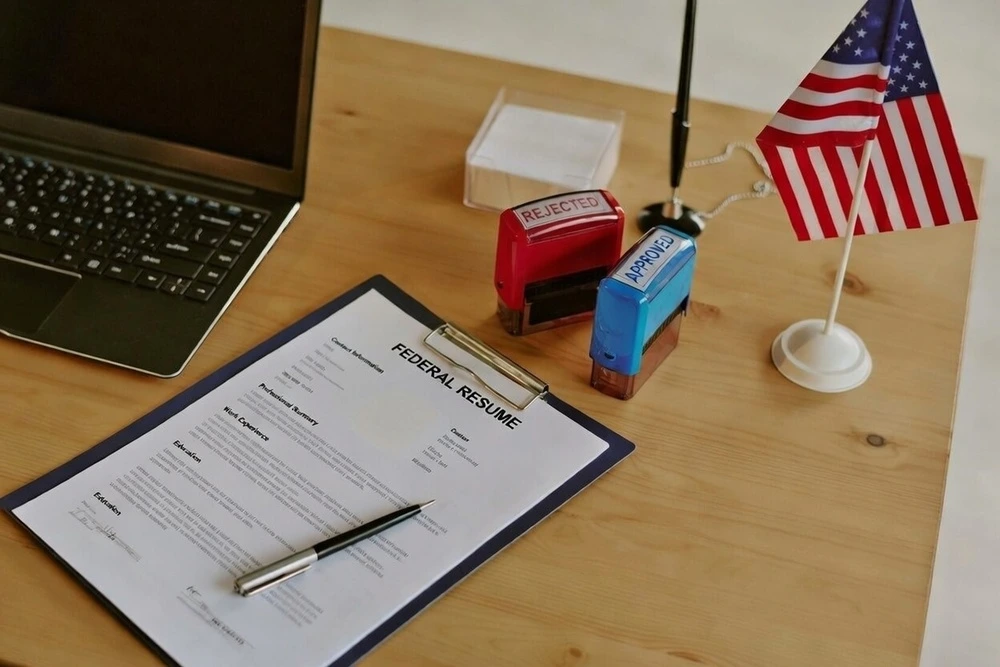
What Is a Federal Resume?
A federal resume is a comprehensive document used by candidates applying to government positions across U.S. federal agencies. Unlike private-sector resumes, it is designed not just to showcase achievements but to meet strict government standards for eligibility and ranking.
Purpose
The primary purpose of a federal resume is to serve as both a formal job application and a verified record of professional experience, ensuring that applicants meet the rigorous standards set by federal agencies.
- An official government job application: This is used to validate claims of eligibility and experience and to determine whether an applicant’s qualifications fully satisfy the competitive service standards. Each statement is treated as declarative evidence, often subject to verification through background checks and agency audits.
- A detailed record of career history, qualifications, specialized skills, and security eligibility: Federal HR specialists rely heavily on these records to verify eligibility and assess whether an applicant’s experience aligns with Office of Personnel Management (OPM) qualification standards for the specified job series.
Compliance
Professionals planning careers in agencies such as the Department of Defense, Veterans Affairs, Homeland Security, or the Centers for Disease Control must adhere to precise federal resume rules to remain competitive in today’s evolving employment climate.
- Keyword Optimization: Candidates are scored based on keywords that indicate specialized experience, making keyword optimization a critical factor in advancing through automated ranking systems embedded within USAJOBS.
- Structured Format: Employment history is outlined in reverse chronological order and includes precise details such as company names and address, job titles, start and end dates (month and year), series and grade, and average weekly work hours. For most positions, omitting even one of these data points can disqualify an application.
- Resume Length Restriction (Newly Implemented in May 2025): Federal resumes must now be no longer than two pages. This rule, implemented through the Merit Hiring Plan and Executive Order 14170, shifts the focus from lengthy narratives to competency-based assessments. Applicants must update or rebuild resumes in their USAJOBS profile to meet the two‑page requirement, or risk disqualification

How a Federal Resume Differs from a Private-Sector Resume?
While both resume types serve to present a candidate’s qualifications, the structural and functional expectations differ dramatically.
- A private-sector resume markets a professional’s unique value through achievements and metrics.
- A federal resume, on the other hand, validates compliance with formal qualification standards aligned with OPM-defined position classifications. Every section must satisfy “specialized experience” requirements tailored to the numeric job series code indicated in each federal vacancy announcement.
Key Comparisons
| Comparison Area | Federal Resume | Private-Sector Resume |
|---|---|---|
| Length | No longer than 2 pages (per Merit Hiring Plan & Executive Order 14170) | Typically 1–2 pages; may extend to 3 for senior roles |
| Purpose | Determines the candidate’s qualification eligibility and validates compliance with OPM standards | Markets skills and achievements to attract interviews |
| Design/Layout | Compliance over aesthetics: no colors, icons, or creative formatting | Flexible: branding, design elements, and creative layouts are encouraged |
| Format | Structured and concise: emphasizes regulatory alignment and mandatory details | Customizable and persuasive: results-focused bullet points highlighting quantifiable impact are common |
| Keywords | Must align with OPM job series and vacancy announcements; includes identifiers such as citizenship, veteran preference, and clearance level | Tailored to job descriptions and ATS optimization |
| Verification | Validated through agency documentation | Evaluated by a recruiter or an ATS algorithm |
Federal hiring is now streamlined under the Merit Hiring Plan and Executive Order 14170, requiring agencies to complete recruitment in 80 days or less. With the new two‑page federal resume limit, applicants must be precise—each line must show eligibility, specialized experience, and compliance with OPM standards. Unlike private‑sector resumes, federal resumes are compliance‑driven government submissions, treated as legal documentation and subject to audits. Mastering this format gives candidates a clear advantage on USAJOBS, where success depends on brevity and accuracy.
Required Sections and Format Standards
The Office of Personnel Management provides explicit guidance on how each federal resume section must appear. Candidates are expected to document qualifications through structured headings that mirror the federal job announcement layout. Accurate data placement ensures the federal HR specialist reviewing the file can locate and verify credentials efficiently.
1. Contact Information
Start your federal resume with essential personal details, including full name, address, phone number, and email. Make sure this information is accurate and current, as it will be the primary way agencies contact you during the hiring process.
2. Federal-specific Information
Federal resumes have specific requirements that are different from private-sector resumes. Ensure to include the following federal-specific details on top of the resume, right after the contact details.
- Relevant security clearance or eligibility (if you have one)
- Country of citizenship
- Veteran’s preference (if applicable)
3. Professional Summary
Include a brief 3–4-sentence resume summary that highlights your strongest qualifications, key skills, and achievements that align with the job.
4. Knowledge, Skills, and Abilities (KSA) or Ranking Factors
While KSAs are still relevant, integrate them concisely into your professional experience or a dedicated core competencies section. Create a comprehensive list of hard and soft skills, focusing on those that are specifically required by the federal job opening.
5. Work Experience
List all paid and relevant unpaid experience, including employer name and address, position titles, start and end dates (month/year), hours worked per week, and a clear description of relevant experience to show how you meet the qualifications. Include federal series and grade, if applicable.
6. Education
Include required details like institution name and address, completion date, degree type, and GPA (if requested), which are verifiable through official transcripts.
7. Additional Sections
Optional but valuable additions include:
- Licenses, certifications, technical training, or agency-approved professional development programs
- Awards and notable recognitions
- Professional affiliations
Just as important, applicants should avoid including personal or sensitive information such as Social Security numbers, photographs, or demographic details. Keeping your resume clean and professional aligns with both privacy and compliance standards.
Formatting consistency is vital. Use plain fonts (Arial or Calibri, 10–12 pt) and avoid tables, text boxes, or images to ensure USAJOBS parsing accuracy. Submit in PDF or Word (.doc/.docx), confirming agency-specific requirements.
For GS-7 and above, highlight specialized experience at least one grade lower per OPM guidelines. Showcase measurable achievements tied to federal frameworks, such as the Federal Acquisition Regulation (FAR), HIPAA, or Federal Financial Management Improvement Act (FFMIA), to strengthen eligibility and rating scores.
Federal Resume Accuracy Through Keywords and USAJOBS Compliance

Federal resumes must balance keyword precision with USAJOBS compliance. Agencies rely on algorithmic filters tuned to OPM-defined terms, so applicants must mirror vacancy announcement language while demonstrating measurable outcomes. Success depends on aligning every statement with the Knowledge, Skills, and Abilities (KSAs) or Specialized Experienced outlined in the posting.
Keyword Optimization
Applicants should analyze the “Duties and Qualifications” section of each vacancy announcement and integrate its phrasing naturally into their resume.
- Mirror KSA and specialized experience terms naturally from the posting. If a vacancy announcement specifies “experience preparing analytical reports using data modeling tools,” the federal resume must clearly state not only that the applicant created reports but also through what tools, processes, and outcomes this experience occurred (e.g., “Prepared analytical reports using SAS and Tableau to improve compliance tracking” instead of “analyzed data regularly”).
- Replace vague claims with context-rich, factual, and specific statements. For example, instead of saying “Analyzed data regularly,” provide detailed metrics or outcomes to pass automated filters. The system searches for context-rich phrasing, often aligning with the exact structures in the original job posting.
- Use measurable results tied to agency mission outcomes: “Improved compliance audits by 15% through real-time data tracking”. Add percentages, time savings, or productivity metrics to strengthen credibility.
- Integrate specialized terms directly from the vacancy announcement, reflecting critical knowledge areas. Missing a key term, even with relevant experience, can lower your rating.
- Include examples of leadership, teamwork, and policy-interpretation. Tailor these examples to the GS level of the target role.
- Describe software, systems, and tools by name: “Utilized Oracle Financials” or “Applied Microsoft Project to coordinate tasks”. Avoid generic references like “used financial software.”
Federal HR offices score resumes on a point-based system, often from 70 to 100. To achieve the highest “Best Qualified” ranking, the resume language must answer each qualification directly. Successful applicants systematically align every accomplishment statement with the knowledge, skills, and abilities—commonly abbreviated as KSAs—that define the role.
USAJOBS Compliance
Ensuring compliance with USAJOBS formatting is a critical step in federal hiring success. Resumes that fail to meet structural and keyword requirements risk being filtered out before reaching a human reviewer. Applicants should approach USAJOBS submissions with precision, balancing standardized formatting with strategic customization:
- Upload a complete federal resume rather than a generic version to meet agency expectations.
- Use the “Resume Builder” tool on USAJOBS to structure data fields correctly. Professionals seeking higher-grade positions may instead upload a customized file meticulously formatted to federal documentation standards.
- Apply strategic keyword integration to bridge automated filtering systems and human evaluation, ensuring fair consideration and maximizing qualification scores.
Common Mistakes to Avoid
Many otherwise qualified candidates are eliminated from federal consideration due to preventable errors. Federal resumes are treated as official records for qualification review, meaning incomplete or poorly structured submissions can reduce scores or fail automated filters. While missing information does not automatically disqualify an applicant, it can make experience unverifiable and lower ratings. Beyond omissions, several content and formatting missteps weaken visibility and credibility within USAJOBS rankings.
Using Private-Sector Formats
Fancy designs, multiple columns, and modern graphics prevent government systems from reading data correctly. Federal resumes must remain text-based, structured, and compliant with USAJOBS formatting standards.
Excluding Required Details
Omitting weekly hours information may cause federal HR reviewers to mark experience as unverifiable. Always include employment dates (month/year), hours per week, and clear position titles.
Underestimating Length
Submitting only a one‑page resume for GS‑level openings limits the demonstration of qualifications depth, while exceeding two pages violates the 2025 Merit Hiring Plan requirement for concise federal resumes.
Overgeneralizing Duty Statements
Lack of specific achievements and relevant regulations weakens keyword matching. Replace generic duties with specific achievements, measurable outcomes, and references to relevant regulations or policies.
Failing to Match Grade Requirements
Descriptions must mention duties equivalent to the previous grade level to gain promotion eligibility credit. Explicitly reference responsibilities that align with GS-level expectations.
Failing to Clarify Timeline Inconsistency
Another overlooked issue is timeline inconsistency. Gaps without explanation or conflicting employment periods can stall security clearances or background verifications. Federal recruiters depend on chronological transparency to evaluate suitability. Candidates should list all relevant public service, volunteer, or military experience since federal HR recognizes equivalent unpaid roles that demonstrate leadership or technical expertise as valid specialized experience.
Making Proofreading Mistakes
Proofreading remains essential. Simple errors—incorrect agency names or broken grammar—may convey carelessness inappropriate for civil service standards. Documentation should remain concise, accurate, and error-free, respecting the procedural rigor expected by the federal government. Successful applicants treat every entry as verifiable testimony, ensuring professionalism at every stage of presentation and review.
Why Federal Resumes Matter in 2026?
Federal hiring continues to expand across infrastructure, cybersecurity, environmental policy, and public health. According to the U.S. Office of Personnel Management, tens of thousands of new positions open annually across agencies, offering stability, pension benefits, and federal healthcare coverage. The federal resume remains the gateway document, serving as the cornerstone of merit‑based selection and determining entry into these career tracks.
To succeed, applicants must adapt to evolving hiring technologies and stricter compliance standards:
- Keyword Alignment: As automated hiring technologies evolve, federal HR specialists increasingly rely on structured keyword evaluation within candidate profiles. Artificial intelligence may pre-screen resumes based on proximity matching of specialized experience phrases. This makes technical precision and adherence to syntax critical.
- Structured Formatting: The ongoing modernization of the USAJOBS platform reinforces alignment between resume content and data-field structuring—reflecting a future where algorithmic literacy now defines applicant competitiveness.
- Documentation Integrity: Job seekers aiming for positions at the GS-9 to GS-15 levels—ranging from policy analysts to program managers and executive officers—should expect even greater scrutiny of documentation integrity. Federal HR professionals prioritize completeness, measurable impact, and verifiable citizenship credentials. Candidates who fail to understand the federal resume framework risk being automatically downgraded or excluded during preliminary reviews.
- Competitiveness: Well-prepared applicants who strategically align their federal resumes with government expectations consistently secure higher referral rates, eligibility scores, and hazard clearances for national employment.
Mastering this level of documentation not only increases government career access but also improves clarity when pursuing promotion eligibility, interagency transfers, or Senior Executive Service candidacy. A federal resume thus represents both entry and advancement—each phrase shaping long-term career trajectory within the United States civil service structure.

Achieve Greater Federal Career Readiness
A competitive federal application depends on more than qualifications—it requires strategic articulation of them within the precise structure recognized by OPM and USAJOBS. Each employment record must demonstrate relevance, accountability, and quantifiable outcomes verifying federal-grade standards. As agencies expand critical programs in technology modernization, disaster resilience, and national security, demand grows for candidates fluent in federal documentation criteria.
Federal job seekers who invest time in perfecting their resumes before submission often achieve results faster. Many professionals choose certified career specialists familiar with federal law, compliance guidelines, and vacancy rating systems to optimize their submissions. Working with such experts ensures not only that the resume matches USAJOBS technical parameters but also that its content communicates impact credibly. Those seeking top-level readiness often collaborate with federal resume writing services that guarantee accuracy, compliance, and persuasive presentation aligned with government hiring frameworks.
Frequently Asked Questions
What is the main purpose of a federal resume?
The main purpose of a federal resume is to document eligibility, specialized experience, and education in alignment with U.S. Office of Personnel Management standards. It helps agencies verify qualifications, determine grade levels, and assess merit for competitive federal positions.
How long should a federal resume be?
Under the 2025 Merit Hiring Plan, a federal resume must be no longer than two pages, with concise, keyword‑rich, and complete details necessary for verification. Unlike older guidance that allowed 4–5 pages, the 2025 plan enforces brevity to streamline automated review and ensure fairness across applicants.
Where should job seekers submit federal resumes?
Federal resumes must be submitted through the official USAJOBS.gov portal. Candidates can upload their own formatted file or use the site’s built-in Resume Builder to ensure compliance with government-required structure.
Can a private-sector resume be used for federal job applications?
No. Private-sector resumes do not meet the required level of detail. Federal HR systems demand specific employment data, such as the number of hours worked per week, to evaluate experience. Using a private-sector format may cause immediate disqualification.
What is the best way to tailor a federal resume?
The best method involves analyzing the vacancy announcement’s “Duties and Qualifications” section and mirroring its key terminology throughout the resume. This ensures keyword alignment for both automated and manual evaluations on USAJOBS.