


A job interview doesn’t end when you walk out the door. What happens next can be just as influential as the answers you gave in the room. A single, well-crafted post interview thank you letter has the power to transform uncertainty into confidence, reinforcing your qualifications, showcasing professionalism, and signaling genuine enthusiasm for the role. The secret lies in making it strategic, timely, and tailored to the opportunity.
Career experts in resume writing, interview preparation, and employer engagement consistently highlight the importance of communication after the interview. This guide equips job seekers at every stage, from entry-level candidates to seasoned executives, with actionable strategies for writing a winning post interview thank you letter. Below, you’ll discover proven techniques on structure, etiquette, personalization, and follow-up that elevate your candidacy and strengthen outcomes across industries and hiring levels.

Why Sending a Post Interview Thank You Email Matters
Sending a thank you email following an interview remains one of the most undervalued yet effective job search strategies. While interviews focus primarily on evaluating skills and fit, the hiring process continues afterward. A follow-up message gives job seekers the opportunity to reaffirm interest, express gratitude, and leave a lasting impression—often influencing hiring decisions in their favor.
Here’s why it matters:
Sets You Apart from the Competition
A survey conducted by CareerBuilder found that nearly 57% of employers prefer candidates who send thank you messages, and over 20% actively eliminate applicants who do not.
Showcases Your Professionalism
This small gesture signals professionalism, emotional intelligence, and respect—qualities employers associate with strong team members. In competitive fields such as IT, healthcare, or executive management, it may even differentiate top contenders from equally qualified peers.
Extends the Conversation
Beyond courtesy, a thank you email extends the conversation strategically. It allows candidates to address lingering questions, clarify misunderstood responses, or reemphasize how their experience aligns with the employer’s priorities. For example, a project manager might use this opportunity to mention a relevant certification that was not discussed during the interview. A well-structured message converts a polite note into a persuasive reminder of value.
Keeps You Fresh in Their Mind
Moreover, in industries where hiring cycles move quickly, timely follow-up ensures continued visibility. Recruiters often revisit candidate communications before making their final decision. A short, professional thank you email ensures the candidate’s name stays top of mind, reinforcing engagement and attention to detail.
Whether applying for a federal position or a remote startup role, expressing gratitude post-interview communicates integrity and initiative—the traits every organization values.
When to Send a Post Interview Thank You Email
Timing defines the impact of a thank you email. A thank you email sent at the right moment can turn a good interview into a great impression.
The 24-Hour Rule
Fire off a thank you email within 24 hours of the interview, ideally the same day if possible. This window ensures the conversation remains fresh in the interviewer’s memory while showing proactive follow-up. Waiting too long risks appearing disinterested or disorganized, particularly in industries where responsiveness influences hiring perceptions, such as customer service or sales.
Mind the Time Zones
Virtual interview follow-ups should also consider time zones. If an interview takes place late in the afternoon across different states, sending a thank you note the next morning during the interviewer’s local business hours ensures visibility in their inbox when they begin the day.
Weekends and Holidays
If your interview falls on a Friday, sending it on the following Monday is advisable. Similarly, if there’s a holiday in between, consider adjusting your timing accordingly to ensure your email doesn’t get lost in a busy inbox.
Panel Interviews Require Multiple Emails
For panel interviews that include multiple decision-makers, sending personalized emails to each participant further demonstrates professionalism. Tailor messages by referencing specific discussion points, insights, or shared professional interests raised during the conversation. When multiple interview stages occur, such as phone screens, technical assessments, and final interviews, each step merits an individualized thank you note. This approach reflects consistency and reinforces enthusiasm.
Executive-Level Considerations
Executives and senior-level candidates may take a slightly nuanced approach. While same-day responses remain ideal, more thoughtful wording and strategic tone carry greater weight than speed alone. For C-suite or director-level interviews, professionalism and composure matter just as much as promptness. These messages should balance appreciation with authority, reaffirming leadership credentials while remaining sincere.
Federal Hiring Practices
In federal hiring contexts, especially where hiring panels and HR reviewers collaborate, the thank you note may also be uploaded to an official candidate file, making accuracy and professionalism crucial.
How to Structure a Post Interview Thank You Email
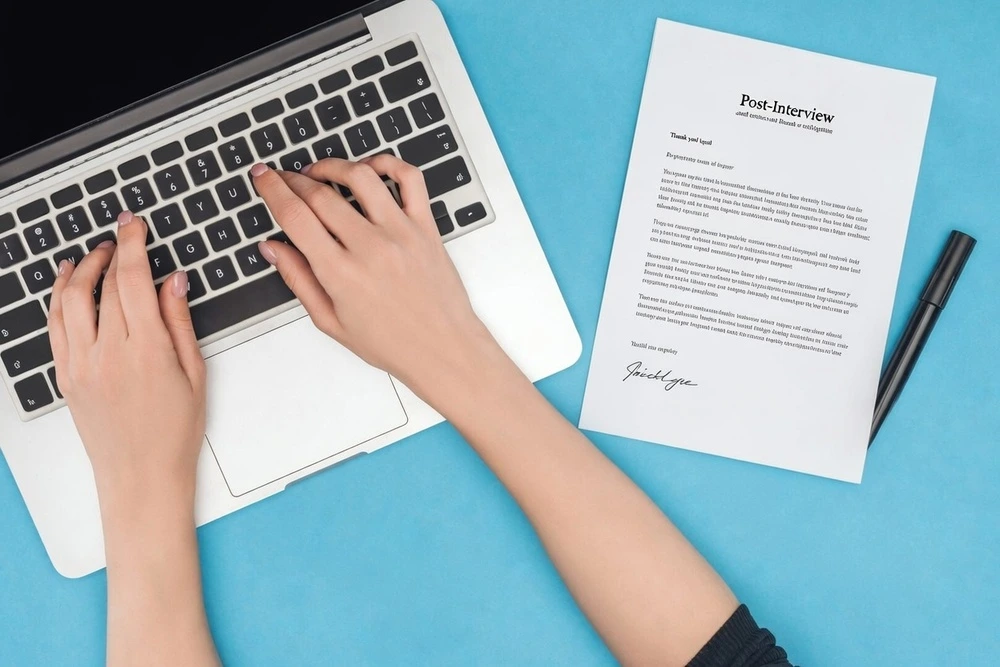
An effective thank you email follows a simple yet impactful structure: greeting, appreciation, personalization, value reinforcement, and closing. Each component plays a functional role in aligning the candidate’s communication with hiring priorities. The message should remain concise, ideally within 150–250 words, while encapsulating professionalism and warmth.
1. Start with a clear and engaging subject line
Keep it clear and professional. Examples include “Thank You for the Interview – [Job Title]” or “Grateful for the Opportunity to Interview with [Company Name].” A well-crafted subject line sets the tone for your email and ensures it stands out in the interviewer’s inbox.
2. Use an appropriate opening greeting
Address the interviewer directly using the correct spelling of their name and title (e.g., “Dear Ms. Torres” beats Hi there every time). If you’re uncertain, a general greeting like “Dear Hiring Team” will suffice. This personal touch demonstrates respect and attention to detail, which are valued traits in any candidate.
3. Convey sincere appreciation in the opening paragraph
Express genuine gratitude for the interviewer’s time and insights shared during the meeting. A heartfelt acknowledgment not only reflects your professionalism but also reinforces the positive rapport established during the interview.
4. Emphasize your enthusiasm for the role and company
Within the body of the email, mention specific aspects of the company culture, mission, or job responsibilities that excite you. Reference a meaningful topic, discussion, or moment from the interview that resonated with you. This shows that you’re genuinely interested in the position and reinforces your suitability for the role.
5. Highlight your key qualifications and skills
Reiterate one to two core qualifications or experiences that align with the organization’s needs. Think of it as a mini highlight reel. Share specific examples from your interview or previous experiences that demonstrate your capabilities, reinforcing your suitability for the role.
6. Wrap up with a polite closing
End with enthusiasm and tact, for instance, expressing interest in contributing to the team while keeping tone polite and forward-looking. A strong closing leaves a lasting impression and emphasizes your eagerness to take the next steps in the hiring process.
7. Incorporate a professional signature
Your professional email signature should contain your name, contact information, and any relevant links, such as your LinkedIn profile. Ensure it looks clean and well-organized, as this adds to your professionalism.
Additional Tips
- A well-written email reflects positively on your attention to detail. Remember, your post interview thank you email is a strategic opportunity to reinforce your candidacy and leave a memorable impression. Customize each email to the specific interview and company for maximum impact.
- The tone must be aligned with the company culture. For creative industries such as marketing or design, slight informality showcasing authenticity works well. Technical and finance roles, by contrast, require more formal, detail-oriented approaches. Job seekers should review the company’s communication style, visible on its website or social channels, to mirror professionalism appropriately.
- The key distinction between strong and generic thank you emails lies in personalization. Instead of repeating qualifications already listed on a resume, effective candidates highlight mutual understanding and genuine enthusiasm. For example, mentioning a shared discussion about data-driven project management or referencing the company’s recent community initiative illustrates deliberate engagement.
Best Practices for Writing a Professional Thank You Email
Job seekers who treat thank you emails as a formality miss the opportunity to influence outcomes strategically. Ensuring effectiveness demands precision, warmth, and optimization for human readability. Several best practices consistently separate well-crafted emails from generic notes, helping secure positive recruiter memories even weeks after an interview.
Keep It Concise Yet Meaningful
Messages exceeding 300 words risk diluting key points. Every sentence should serve a clear purpose—whether expressing gratitude, reinforcing fit, or re-engaging discussion topics. Hiring managers often scan emails quickly, so brevity paired with clarity wins attention.
Personalize Every Message
Avoid templates. Referencing something discussed in the conversation—such as the interviewer’s comment on leadership culture or current departmental goals—shows genuine attentiveness and credibility.
Highlight One Key Strength
Instead of summarizing an entire career, focus on one capability strongly matched to the position. For instance, a cybersecurity analyst might reference risk mitigation experience relevant to the company’s compliance objectives.
Maintain Professional Formatting
Avoid elaborate fonts or unnecessary formatting. The message should follow standard business email conventions: single spacing, clear separation between paragraphs, and a professional email signature.
Proofread Thoroughly
Before hitting “Send,” make sure to proofread your email for any typos or grammatical errors. Typographical or grammatical errors can offset even the most polished interviews. Reading the message aloud or using a grammar-checking tool verifies clean presentation.
Avoid Overly Casual Language
While authenticity matters, expressions like “just checking in” or emoji usage may undermine professionalism. Balanced tone—warm but formal—sustains credibility.
Ensure Accessibility and Readability
A critical component of thank you email writing also includes accessibility across devices. Recruiters may view messages on mobile screens. Short paragraphs, clean formatting, and efficient word choice enhance readability. Including a descriptive subject line—rather than vague text such as “Thank You”—also ensures higher open rates.
Maintain Consistency Across Communication Channels
Maintaining professional consistency across communication channels signals diligence and brand alignment—traits top employers seek in new hires. Whether for nursing positions, software engineering roles, or administrative posts, a sharp post interview thank you email reinforces interview performance and attention to detail simultaneously.
Common Mistakes to Avoid in a Thank You Email
Despite good intentions, many candidates weaken their impact through common email errors. Understanding what to avoid ensures messages maintain professionalism and credibility. Mistakes often arise from misunderstanding tone, timing, or purpose. The following actions undermine otherwise strong applications:
Using Generic Templates
Copy-pasting a template without personalization appears robotic. Interviewers quickly recognize repetitive phrasing—reducing perceived sincerity.
Rehashing the Entire Resume
The email should not restate full qualifications or experiences. It complements, not duplicates, previous materials.
Forgetting Names or Titles
Incorrect spellings or salutations create an impression of carelessness. Verifying interviewer information from correspondence safeguards accuracy.
Delaying Beyond 48 Hours
Late follow-ups lose momentum and weaken perceived enthusiasm. Timing remains essential to signaling genuine interest.
Sounding Overly Confident or Desperate
Either extreme—excess humility or assertive presumption—can misfire. Professional gratitude with balanced tone maintains respect and composure.
Neglecting Proofreading
One misspelled company name can undo the positive impression of an interview. Attention to every detail defines credibility.
Adding unnecessary attachments or sending thank-you notes through social media also diminishes professionalism. Employers expect formal communication through corporate email channels unless otherwise specified. Additionally, job seekers should refrain from asking for updates or next steps immediately within the thank-you message. Follow-up about hiring status should occur separately after a week or as directed during the interview.
To help you further, you may also watch this video for a quick rundown of these tips:
Sample Post Interview Thank You Email (For Reference Only)
Although each message must remain unique, reviewing a structural reference helps candidates visualize effective design. This example reflects professional etiquette adaptable across industries, whether healthcare, IT, or education.
Here’s a sample thank you email after interview:
Subject: Thank You for the Interview Opportunity

Dear [Interviewer's Name],

I hope this email finds you well. I wanted to express my heartfelt gratitude for the opportunity to interview for the [Job Title] position at [Company Name] on [Interview Date]. It was a pleasure to meet you and your team and learn more about the exciting work being done at your company.

I was particularly impressed by the company's commitment to [mention something specific you found impressive, such as their innovative projects, mission, or company culture]. It aligns perfectly with my career aspirations, and I'm even more enthusiastic about the possibility of contributing to your team.

During the interview, I was excited to discuss how my experience in [mention relevant experience or skills] could benefit [Company Name]. I am confident that my [specific skills or qualifications] would enable me to make a valuable contribution to your team and help [mention a specific project or goal discussed during the interview].

If there are any additional details or questions you have for me or if you require any further information, please don't hesitate to reach out. I'm eagerly looking forward to the next steps in the interview process and the possibility of joining the [Company Name] team.

Once again, thank you for your time and consideration. It was a pleasure meeting you and your team, and I am enthusiastic about the opportunity to contribute to [Company Name]'s continued success.

Best regards,

[Your Name]
[Your Contact Information]
[LinkedIn Profile (optional)]
Below is an example of short post interview thank you email
Subject: Thank You for the Interview

Dear [Interviewer's Name],

I wanted to extend my gratitude for the interview opportunity at [Company Name] yesterday. It was a pleasure to discuss the [Job Title] position with you and learn more about your team and company culture.

I'm excited about the prospect of joining [Company Name] and contributing my [Key Skill or Experience] to your organization. If you need any further information or have additional questions, please feel free to reach out.

Thank you once again for your time, and I look forward to the next steps in the process.

Best regards,

[Your Name]
This structure ensures the email stays organized while reinforcing the candidate’s professionalism. Candidates can adapt wording to their own style and circumstance, ensuring balance between formality and sincerity. The format remains consistent across fields and seniority levels, positioning applicants effectively for final selection.
Leveraging the Thank You Email as a Strategic Follow-Up
A well-written post interview thank you email functions as more than a courtesy gesture—it can strategically influence final hiring decisions. By aligning post-interview communication with employer needs, candidates can reinforce essential messages that strengthen professional branding. This subtle yet powerful technique differentiates candidates who view recruitment as a two-way relationship of mutual compatibility.
Professionals can attach brief, relevant insights that enhance the conversation. For instance, an engineer who mentioned process optimization tools during the interview may include a concise link to a public portfolio project or certification profile. The addition must always remain relevant and restrained. Overloading messages with attachments or unrelated documents, however, may distract from the main purpose: appreciation and reinforcement.
In cases where interviews include a practical assignment or presentation, following up with brief reflective comments—such as lessons learned or enthusiasm about implementing discussed strategies—can further display initiative. Many employers interpret proactive communication as an indicator of long-term engagement potential. When framed correctly, this converts post-interview correspondence from routine politeness into a tactical career move.
Finally, candidates should document follow-up correspondence within their job search records to maintain organized application tracking. Maintaining structured activity logs supports transparent networking, especially when managing multiple interviews simultaneously. Digital organization also assists in planning subsequent communication cycles—such as re-engagement if no decision feedback occurs within expected time frames.
Building Long-Term Relationships Through Professional Courtesy
While the primary goal of a post interview thank you email centers on securing the current position, its influence extends beyond immediate hiring outcomes. Consistent professionalism contributes to long-term career networking. Recruiters often retain records of exceptional communication and may revisit rejected candidates for future roles. Maintaining civility, gratitude, and connection positions individuals favorably for subsequent opportunities.
In industries such as healthcare, academia, or government service—where turnover and project cycles vary—relationship-building remains instrumental. Even if an opening closes, a courteous email exchange fosters goodwill with hiring managers and HR personnel. Many federal and corporate recruiters use professional memory or repository notes that cite well-written correspondence as a benchmark for reliability and professionalism.
Furthermore, expressing thanks authenticates leadership and emotional maturity. Colleagues and supervisors value professionals who practice professional courtesy consistently. For executives especially, communication after interviews sets precedent for collaboration style and public representation—factors influencing internal leadership dynamics later in the organization.
Therefore, candidates who master follow-up etiquette elevate every future professional interaction. Polished writing, clarity of intent, and respect toward others build credibility across one’s career trajectory—whether applying for managerial advancement, transitioning industries, or exploring consulting opportunities. A simple thank you email, executed thoughtfully, transcends recruitment—it becomes a lifelong branding practice rooted in authenticity and respect.
Polish Every Step of the Hiring Process
A powerful thank you email reinforces professionalism—but it builds upon an equally refined resume and interview strategy. Job seekers who combine thoughtful communication with documented achievements gain unmatched credibility. Precise presentation from application to follow-up sustains candidate momentum. Many professionals enhance this advantage through expert resume writing services that align messaging consistency across resumes, cover letters, and post-interview communications.
Frequently Asked Questions
How long should a post interview thank you email be?
Most post interview thank you emails should range between 150 and 250 words. This ensures conciseness while allowing candidates to include appreciation, personalization, and reinforcement of fit without redundancy. Shorter messages may appear rushed; excessively long ones risk losing attention.
Is it acceptable to send a thank you email to multiple interviewers?
Yes. When interviews involve multiple participants, each interviewer should receive an individualized thank-you note. Slight variations referencing each person’s specific input create authenticity. Copy-pasting identical emails diminishes sincerity and can appear careless to coordinated hiring teams.
Should job seekers send a thank you email after virtual or phone interviews?
Absolutely. Whether the exchange occurs in person or remotely, expressing gratitude indicates professionalism and consistency. Virtual settings still represent official evaluations, and acknowledgment strengthens rapport, especially when physical connection is limited to voice or video.
Can job seekers include attachments or links in a thank you email?
Including brief, relevant links—such as a portfolio site, publication list, or certification profile—is acceptable if discussed during the interview. Attachments should only be sent when explicitly requested. Unsolicited files can overwhelm email systems or appear presumptuous.
How soon should candidates expect a response after sending a thank you email?
Responses vary depending on company policy and hiring stage. While a post interview thank you email may not always receive a direct reply, it reinforces positive impressions influencing final decisions. Candidates should wait approximately one week before following up separately about hiring status.