


Machine operators aren’t just button-pushers—they’re the backbone of modern production, the guardians of precision, and the silent force behind every flawless product rolling off the line. Those aiming to advance in this high-demand production field must balance technical detail with performance-driven storytelling to capture manufacturing employers’ attention.
From aligning skills with operational standards to ensuring resumes meet the expectations of automated screening systems, standing out as a qualified machine operator requires strategy. This resource supports individuals exploring stable and rewarding roles in machining and production environments. It is designed for job seekers targeting manufacturing, fabrication, construction, and mechanical industries.
The following sections detail every critical component of a machine operator job description—including typical responsibilities, required competencies, preferred certifications, pay expectations, and advancement opportunities—helping professionals position themselves effectively for long-term success.

Overview of Machine Operator Roles
A machine operator is a hands-on professional responsible for running and maintaining equipment used in the production of goods across manufacturing, construction, or fabrication industries. Operators play a crucial part in keeping production lines efficient, safe, and compliant with quality standards. Their performance directly affects plant productivity, material waste reduction, and operational safety outcomes.
Machine operators oversee heavy and light machinery designed to shape, assemble, package, or process products. They interpret blueprints and production specifications to adjust machine settings, calibrate components, replace worn parts, and troubleshoot equipment when performance falters. Many also record data on production output and maintenance logs to support process improvement and regulatory documentation.
The role demands technical literacy, precision, and situational awareness. Operators often manage automated systems or programmable logic controllers (PLCs), adjusting mechanical and digital controls to maintain accuracy within tight tolerances. In industries such as automotive, electronics, food manufacturing, and aerospace, small deviations in calibration can lead to costly product defects, making vigilance and consistency essential traits for professionals in this field.
Core Responsibilities in a Machine Operator Job Description
The daily responsibilities of a machine operator vary depending on company size, machinery type, and production environment. Nevertheless, most operators share foundational duties that align with industrial best practices and workplace safety regulations established by organizations such as OSHA (Occupational Safety and Health Administration).
- Machine Setup and Calibration: Operators prepare mechanical or automated equipment for production runs by aligning parts, calibrating settings, and ensuring materials are fed correctly into machines. Proper setup ensures efficiency and reduces stoppages.
- Production Monitoring: Continuous supervision of machinery ensures consistent product quality and minimizes downtime. Operators listen for irregular noises or vibrations that may indicate potential mechanical failure.
- Maintenance and Troubleshooting: Routine cleaning and lubrication are critical for operational safety. Experienced operators inspect parts for wear and make immediate adjustments to sustain productivity.
- Quality Control: Operators perform frequent measurements using tools such as calipers, micrometers, and gauges to confirm adherence to product specifications. Documentation of test data supports compliance with ISO standards.
- Safety Compliance: Machine operators uphold lockout/tagout procedures, use protective gear, and adhere to plant-wide safety protocols to prevent accidents in fast-paced environments.
- Collaboration and Reporting: They regularly interact with maintenance technicians, engineers, and supervisors to communicate production challenges and contribute to continuous improvement initiatives.
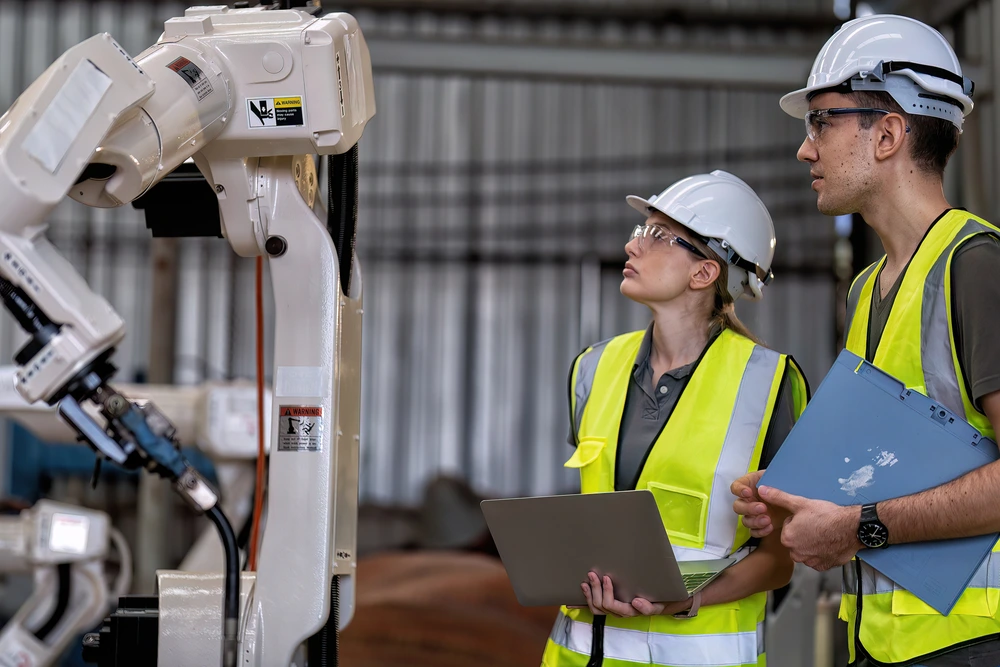
Well-written job descriptions emphasize accountability, consistency, and safety awareness. Employers typically expect candidates to demonstrate a thorough understanding of both basic mechanical processes and automated systems integration, particularly in advanced manufacturing environments where robotics and data-driven monitoring have become standard.
Key Skills and Competencies of Successful Machine Operators
Employers seek machine operators who blend practical technical expertise with cognitive and interpersonal abilities essential for teamwork and strategic decision-making. The combination allows operators to adapt easily to emerging technologies and evolving manufacturing standards. The following table summarizes the typical competencies expected for operational excellence.
| Skill Category | Examples and Description |
|---|---|
| Technical Proficiency | Operating CNC machines, hydraulic presses, molding systems, and assembly robots; reading technical drawings and schematics. |
| Attention to Detail | Detecting subtle deviations in performance indicators or part dimensions; ensuring precise alignment during setup and calibration. |
| Critical Thinking | Diagnosing mechanical issues quickly and evaluating corrective actions to prevent costly downtime. |
| Team Collaboration | Communicating efficiently with maintenance and quality assurance teams to ensure integrated production performance. |
| Safety Orientation | Maintaining compliance with OSHA-mandated safety standards, ergonomics practices, and accident prevention policies. |
| Technical Adaptability | Learning to operate digital monitoring panels, PLC systems, or Industry 4.0 smart manufacturing tools. |
Beyond technical qualifications, employers value reliability, willingness to work various shifts, and the ability to thrive in repetitive yet precision-oriented tasks. As production facilities integrate automation technologies in 2026 and beyond, adaptability to digital interfaces and smart data tools becomes increasingly vital for professionals at every level of manufacturing operations.
Educational and Certification Requirements
Most machine operator roles require at least a high school diploma or equivalent; however, employers often prefer candidates with vocational training or associate degrees in machining, industrial maintenance, mechatronics, or manufacturing technology. Trade schools and community colleges across the United States offer focused programs blending classroom instruction with hands-on equipment training, preparing individuals for immediate employment.
Certifications boost opportunities for advancement and higher pay. Recognized credentials include those offered by the National Institute for Metalworking Skills (NIMS) and the Manufacturing Skill Standards Council (MSSC). NIMS certifications validate precision machining and CNC programming expertise, while the MSSC’s Certified Production Technician (CPT) credential covers safety, maintenance, quality, and manufacturing processes.
Employers in specialized industries may also value training in Six Sigma methodologies, ISO standards, or OSHA safety compliance. Machine operators pursuing supervisory positions benefit from courses in lean manufacturing and operations management. Through ongoing education, operators can evolve into maintenance leads, production coordinators, or manufacturing engineers, contributing to the long-term economic competitiveness of industrial organizations.
Machine Operator Salary Outlook and Job Growth
As of 2025, skilled machine operators continue to experience steady demand across manufacturing sectors. According to the U.S. Bureau of Labor Statistics (BLS), median annual wages for machine operators in transportation equipment and precision manufacturing average around $47,000, while specialized CNC operators and setters can earn over $60,000 depending on experience and region. High-paying states include California, Michigan, and Illinois—major hubs for advanced production and automotive manufacturing.
Job growth for machine operators is projected to remain stable as automation transforms production plants. Rather than replacing human skills, technology has shifted the demand toward technicians proficient in digital controls and predictive maintenance systems. The manufacturing sector continues to face a talent gap, with the Manufacturing Institute estimating millions of unfilled skilled trade positions nationwide—a strong signal of opportunity for qualified operators seeking sustainable careers.
Overtime opportunities, union representation, and benefits such as pension programs contribute to financial stability for operators in established facilities. Professionals who actively refine their technical knowledge—particularly in robotics, additive manufacturing, or data analytics—can expect above-average earnings potential and broader career pathways within production leadership or training functions.
Career Advancement and Related Job Titles
Machine operator roles provide a reliable foundation for progression within industrial and engineering environments. Many professionals start as general operators and advance into setup technicians, CNC programmers, quality inspectors, maintenance specialists, or shift supervisors through on-the-job learning and targeted training.
The following job titles often represent upward or lateral mobility from machine operation positions:
- Machinist or Tooling Technician
- Industrial Maintenance Mechanic
- Production Supervisor or Lead Operator
- Manufacturing Technician or Quality Assurance Inspector
- CNC Programmer or Controls Specialist
- Plant Scheduler or Process Improvement Coordinator
Employers value continuous improvement mindsets and leadership readiness. Candidates who demonstrate problem-solving proficiency and communicate effectively across departments often transition into supervisory or engineering liaison roles. Upskilling through company-sponsored apprenticeships or industry certifications plays a central role in this upward trajectory.
Essential Tools and Technologies Used by Machine Operators
Modern machine operation integrates both mechanical knowledge and digital literacy. Operators regularly use computerized numerical control (CNC) systems and advanced diagnostics software that synchronizes with the Internet of Things (IoT) for real-time production analytics. Understanding these technologies gives professionals a distinct competitive advantage in high-efficiency manufacturing settings.
| Category | Common Tools or Systems |
|---|---|
| Measurement | Micrometers, calipers, dial indicators, gauges for accuracy verification |
| Software and Interfaces | CNC programming software, CAD/CAM systems, digital job orders, PLCs |
| Safety Equipment | Hearing protection, reinforced gloves, safety glasses, respirators, helmets |
| Maintenance Tools | Lubrication kits, alignment devices, temperature sensors, torque wrenches |
| Smart Systems | Automated monitoring sensors for predictive maintenance and quality analytics |
In advanced manufacturing environments, machine operators often collaborate directly with automation engineers to update digital configurations and ensure seamless production across multiple workstations. As smart factories become mainstream in 2025, those skilled in monitoring software-driven machinery and interpreting sensor data will find more stable, higher-paying positions.
Writing a Resume for Machine Operator Positions
An effective machine operator’s resume highlights technical mastery, production impact, and safety record. Employers prioritize measurable achievements such as improved efficiency rates, reduced downtime, or zero injury records. Strategic keyword optimization—incorporating terms like “CNC operation,” “preventive maintenance,” and “equipment calibration”—helps applications succeed in applicant tracking systems.
- Professional Summary: A concise overview emphasizing years of operational experience, core machinery types handled, and certifications held.
- Key Skills Section: Clearly lists technical, analytical, and safety-related skills relevant to high-performance manufacturing.
- Metrics-Driven Accomplishments: Examples include “increased production efficiency by 18% through optimized setup procedures.”
- Certifications and Training: Highlight recognized credentials, OSHA compliance, or continuing education in machine operation or safety.

Transform Your Resume into a Powerful Career Tool
Is your resume truly showcasing your expertise and dedication? A refined resume demonstrates both proficiency and accountability. Many job seekers gain an edge by partnering with ATS-friendly resume specialists who are expert at tailoring documents to meet the specific demands of technical roles and the expectations of employers.
Don’t let your hard-earned qualifications go unnoticed—ensure your resume effectively communicates with both hiring managers and automated screening systems. Invest in a document that truly represents your professional journey and sets you apart from the competition.
Frequently Asked Questions
What qualifications are needed to become a machine operator?
Entry-level machine operators typically need a high school diploma and mechanical aptitude. Employers often provide on-the-job training, while trade certifications from NIMS or MSSC enhance employability. Those working on CNC or automated systems benefit from completing a two-year technical degree.
Which industries hire machine operators most frequently?
Machine operators are employed across manufacturing, automotive, aerospace, packaging, food processing, and construction supply sectors. The automotive and electronics industries consistently report strong hiring activity due to high production volume and tight precision standards.
How much do machine operators earn annually?
According to the U.S. Bureau of Labor Statistics, average wages for machine operators range from approximately $40,000 to $60,000 annually, depending on region, specialization, and experience. Skilled CNC operators and those handling complex systems generally command higher pay scales.
What career growth opportunities exist for machine operators?
Experienced operators can advance to supervisory, quality inspection, or maintenance technician roles. With additional training, some transition into manufacturing engineering or operations management, particularly within companies promoting internal development programs.
Is the demand for machine operators declining because of automation?
Despite automation, demand remains steady. Automated systems require human oversight, calibration, and maintenance. Skilled operators capable of interpreting real-time data and optimizing digital workflows will continue to be valuable in modern production facilities.