


Job seekers often ask the questions, what is a hiring manager and why they matter. As the true decision-makers in the hiring process, they hold the authority to determine who gets hired, and even strong candidates risk rejection if they overlook their expectations. Knowing how hiring managers think can turn an overlooked resume into a callback in today’s competitive job market.
This guide explains what a hiring manager is, how their role differs from recruiters and HR, and how you can appeal to them strategically. Whether you’re entry-level, an executive, a federal applicant, or a career changer, understanding their influence is key to navigating modern recruitment.

What Is a Hiring Manager?
Understanding what a hiring manager is means recognizing the critical responsibilities they carry in shaping the workforce. Beyond simply filling a position, hiring managers bridge company needs with talent, evaluate candidates holistically, and make decisions that directly impact organizational success.
Link Between Company Needs and Talent: Hiring managers evaluate more than technical qualifications. They assess cultural fit, leadership potential, and alignment with organizational objectives. Their decisions directly influence profitability, innovation, and team performance.
Decision Maker in Hiring: Recruiters may recommend candidates, but hiring managers hold final approval. They shape job descriptions, lead interviews, and determine who joins the team. Their choices carry operational consequences, linking staffing efficiency to long-term success.
Department Experts: Unlike recruiters or HR professionals who manage candidate sourcing and administrative procedures, hiring managers are typically supervisors or department leaders who know the available position inside out. They are embedded within departments and understand the day-to-day realities of the role—whether in engineering, nursing, finance, or education—and evaluate candidates against both technical demands and team dynamics.
In practical terms, a hiring manager might be:
- A lead nurse evaluating RN applicants in a hospital unit.
- A director assessing financial analysts.
- A principal selecting a new teacher.
Recognizing their influence allows job seekers to tailor resumes and interviews toward the hiring managers’ expectations, not just HR keywords.

Key Responsibilities of a Hiring Manager
Hiring managers play a central role throughout the recruitment lifecycle. From forecasting departmental needs to approving final job offers, their decisions shape not only who joins the organization but also how effectively new employees integrate and contribute to long-term success.
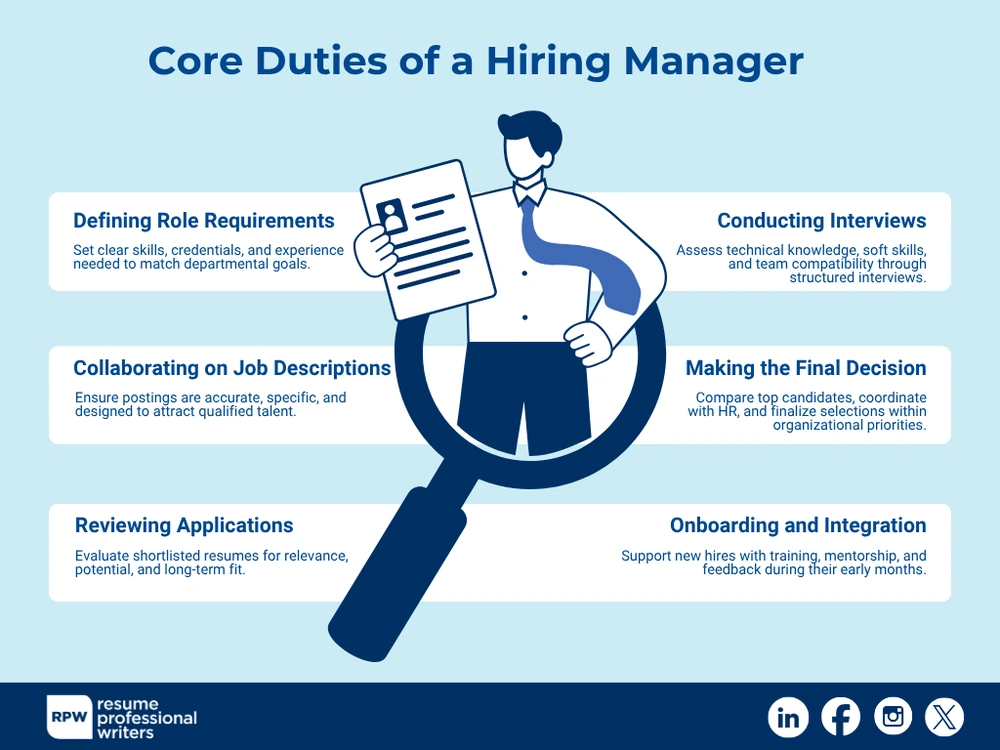
Their core responsibilities include:
- Defining Role Requirements: Hiring managers determine the skills, credentials, and experience levels required for a position, ensuring alignment with departmental goals and working conditions.
- Collaborating on Job Descriptions: Their insights ensure job postings are specific, accurate, and strategically designed, helping recruiters attract qualified talent.
- Reviewing Applications: Once resumes pass ATS screening, hiring managers evaluate shortlisted candidates based on job relevance, performance potential, and long-term fit.
- Conducting Interviews: Through structured and behavioral interviews, they assess technical knowledge, soft skills, and compatibility of applicants with team dynamics.
- Making the Final Decision: Hiring managers compare top contenders, negotiate with HR, and finalize selections based on performance metrics, compensation limits, and organizational priorities.
- Onboarding and Integration: Post-hire, they ensure the new employee receives adequate training, mentorship, and feedback during the initial months.
These responsibilities make hiring managers pivotal players in workforce planning. Their collaboration with HR guarantees compliance and consistency, while their specialized insight ensures that the job offer aligns with operational demands. When they make evidence-based hiring decisions, they enhance productivity, minimize turnover, and strengthen team morale.
Recruiter vs. Hiring Manager: Key Differences
Recruiters and hiring managers both play essential roles in the recruitment process, but their responsibilities and perspectives differ significantly. Recruiters act as facilitators of the hiring pipeline, managing multiple vacancies at once. Their focus is on sourcing candidates, conducting preliminary interviews, and handling administrative tasks such as background checks or preparing offer letters.
Hiring managers, by contrast, serve as the final decision-makers. They define the success criteria for a specific role, evaluate candidates against departmental needs, and determine which individual best fits the team and the organization’s long-term goals. Their decisions carry operational implications that extend beyond recruitment metrics, influencing productivity, retention, and overall workforce stability.
Side-by-Side Comparison
| Aspect | Recruiter | Hiring Manager |
|---|---|---|
| Role Focus | Sourcing and screening job applicants | Evaluating and selecting qualified candidates |
| Primary Objective | Build a diverse pool of potential hires | Fill a specific position effectively |
| Level of Involvement | Early to mid-stages of the hiring process | Throughout interviews to final decision |
| Perspective | Company-wide hiring efficiency | Departmental performance and cultural alignment |
| Final Decision Authority | Provides recommendations | Issues the official hiring approval |
Understanding this distinction helps applicants tailor their approach to the correct audience. Communicating effectively with recruiters ensures visibility in the early stages of the process, while aligning with the priorities of hiring managers demonstrates readiness to meet departmental goals. Candidates who recognize these differences are better positioned to navigate recruitment strategically and present themselves as both qualified and adaptable.
Skills and Traits of Effective Hiring Managers

Research from the Society for Human Resource Management indicates that recruitment strategies incorporating managerial input can reduce voluntary turnover by as much as 30%. Organizations with strong hiring managers therefore tend to foster greater stability, higher job satisfaction, and stronger opportunities for employee growth.
Yet the impact of hiring managers extends beyond retention metrics. Their approach directly shapes how candidates perceive the employer brand. When managers lead with fairness, transparency, and consistency, they elevate the candidate experience and leave lasting impressions that strengthen organizational reputation in competitive markets.
To fully understand what is a hiring manager, it is essential to look beyond their responsibilities and examine the skills and traits that make them effective leaders in talent acquisition and workforce development.
- Strategic Thinking: Job seekers benefit most from hiring managers who align recruitment objectives with business strategy. They understand how each role contributes to profitability, innovation, and operational continuity, ensuring that every hire supports measurable outcomes.
- Communication: Clear communication is essential. Effective hiring managers set expectations, provide feedback, and establish performance goals during interviews and onboarding. This clarity reduces misunderstandings and accelerates integration into the team.
- Decision-Making: Hiring decisions require balancing data-driven evaluation with intuition about team synergy and leadership potential. Managers who master this balance minimize risk while maximizing return on investment in talent.
- Bias Awareness: Unconscious bias can undermine fairness and diversity. Strong hiring managers recognize these risks and actively mitigate them, ensuring evaluations are equitable and outcomes support organizational inclusivity.
- Time Management: Recruitment timelines directly affect productivity. Effective hiring managers coordinate schedules efficiently, preventing delays while maintaining departmental performance.
Effective hiring managers are more than gatekeepers of talent—they are architects of organizational success. By blending strategic insight, clear communication, fair evaluation, and efficient execution, they create teams that thrive. Their influence extends well beyond the hiring decision: they reduce turnover, improve job satisfaction, and shape the candidate experience in ways that resonate across the organization.
The Hiring Process from a Manager’s Perspective

Recruitment looks very different when viewed through the lens of a hiring manager. It’s not just about interviews—it begins with identifying a business need and extends through onboarding, ensuring that new hires contribute to long-term organizational success.
1. Identifying the Need
Hiring managers recognize performance gaps or growth opportunities, then work with HR to define the role, update job descriptions, and set compensation benchmarks.
2. Partnering with Recruiters
Once the position is approved, recruiters source candidates. The hiring manager reviews resumes, focusing on relevance, potential, and alignment with departmental priorities.
3. Leading the Interview
During the interview phase, hiring managers assess candidates’ ability to contribute meaningfully to current projects and future growth. They develop practical scenarios, case analyses, or technical assessments to evaluate both technical expertise and adaptability.
4. Making the Selection
Post-interview, hiring managers compare candidates against consistent criteria such as communication, problem-solving, cultural fit, and readiness to embrace company values. They collaborate with HR to finalize offer conditions, approve salaries, and set start dates.
5. Driving the Onboarding
The role of the hiring manager continues after the hire. They lead the onboarding process, ensuring new hires receive mentorship , training, and resources necessary for sustained performance. This involvement from recruitment through retention drives workforce consistency and organizational success.
Expert Tip
Job seekers who recognize this workflow can engage more effectively during interviews.
Align your interview responses with the manager’s priorities—such as productivity goals, team dynamics, and business outcomes.
This demonstrates that you’re not just qualified on paper but also prepared to contribute meaningfully to the organization, making you a stronger contender in a competitive market.
How Job Seekers Can Appeal to Hiring Managers
To capture the attention of a hiring manager, candidates must tailor their resumes, cover letters, and interviews toward measurable outcomes. Hiring managers value applicants who demonstrate how their expertise translates into improvements in revenue, workflow efficiency, client satisfaction, or innovation. Concrete metrics and role-specific keywords make these connections clear and persuasive.
The following strategies highlight how applicants can demonstrate measurable value and position themselves as strong contenders:
Customize the Application
Align achievements with the company’s strategic objectives rather than listing generic responsibilities. This demonstrates awareness of organizational priorities and positions the candidate as a contributor to long-term success.
Highlight Collaboration
Hiring managers prioritize individuals who can integrate into existing teams, handle challenges proactively, and foster accountability. Evidence of teamwork and adaptability signals readiness for departmental alignment.
Demonstrate Problem-Solving
Cite examples of cost savings, project efficiencies, or client impact to resonate with data-driven managers. These outcomes show the ability to reduce risk and deliver tangible value.
Show Professional Growth
Highlight evidence of certifications, leadership roles, or continuous training. Hiring managers view professional development as a marker of long-term potential, resilience, and adaptability in evolving industries.
Engage with Confidence
Assertive communication, balanced with receptiveness to feedback, builds trust early in the process. Confidence underlines preparedness, while openness signals collaborative potential.
Expert Tip
Hiring managers appreciate applicants who respect their time and come prepared with thoughtful insights.
Ask intelligent questions about performance expectations or departmental goals demonstrates initiative. Employers view such traits as indicators of readiness for collaborative success.
Prepare materials that reflect the hiring manager’s priorities to gain a competitive edge ahead of less strategic applicants.
Industry Variations in the Hiring Manager Role
While the hiring manager’s core responsibilities remain consistent across sectors, their focus areas differ based on industry-specific complexities. Each sector carries unique risks, compliance requirements, and performance expectations, which means hiring managers prioritize different qualities when evaluating candidates.
| Industry | Managerial Hiring Priorities |
|---|---|
| Healthcare | Licensure verification, patient safety, and adherence to federal healthcare compliance standards. |
| Information Technology | Certifications, coding proficiency, cybersecurity awareness, and collaboration in agile environments. |
| Finance | Accuracy, ethics, and data integrity under regulatory guidelines like Sarbanes-Oxley. |
| Education | Subject expertise, teaching credentials, student engagement strategies, and assessment results. |
| Engineering | Project management capability, safety compliance, and innovation under time constraints. |
Understanding these distinctions enables job seekers to tailor their approach and speak the managerial language that resonates most strongly in their field. For instance:
- Healthcare: A hiring manager in a hospital setting is less concerned with broad leadership skills and more focused on whether you can deliver safe, regulation-compliant care. Emphasize clinical precision and compliance when applying.
- Information Technology: Tech directors often prioritize adaptability. Highlight certifications, but also show how you thrive in dynamic, fast-paced environments where innovation and security are equally critical.
- Finance: Here, risk management is paramount. Hiring managers want evidence of ethical decision-making and accuracy under pressure. Demonstrating familiarity with compliance standards can set you apart.
- Education: Principals and department heads look for candidates who can balance subject expertise with student engagement. Show how your teaching strategies translate into measurable outcomes.
- Engineering: Hiring managers in this field value efficiency and innovation. Stress your ability to manage projects under tight deadlines while maintaining safety and quality standards.
For professionals transitioning between industries, the focus must be on transferable achievements. For example:
- Problem-solving skills in IT can translate into process optimization in finance.
- Leadership in education can demonstrate team management potential in healthcare.
- Project management in engineering can highlight organizational skills applicable across sectors.
By framing experience in terms of measurable outcomes and risk reduction, candidates demonstrate awareness of managerial priorities—even outside their original field. This approach signals adaptability and strategic value to hiring managers across industries.
Optimizing Communication with Hiring Managers
Effective communication with a hiring manager begins well before the formal interview. From cover letters to post-interview follow-ups, every interaction should reflect clarity, professionalism, and relevance. Messages that demonstrate understanding of business objectives and role requirements signal preparedness and respect for the hiring process.
To achieve this, candidates can apply several proven communications strategies:
- Email Etiquette: Concise subject lines and structured content convey professionalism and attention to detail.
- Follow-Up Strategy: Timely gratitude emails reinforce interest while offering one additional insight that strengthens candidacy.
- LinkedIn Engagement: Thoughtful engagement on professional platforms can establish familiarity even before interviews occur.
- Confidence Under Pressure: Calm and articulate communication underlines emotional intelligence—an attribute hiring managers value highly.
Maintaining a professional tone across all interactions creates positive impressions that extend beyond current openings. Many hiring managers keep strong candidates in mind for future roles, making every communication an opportunity to strengthen long-term employability.

Why Understanding Hiring Managers Boosts Career Success
Gaining insight into the role of a hiring manager transforms how candidates approach job applications. It encourages personalization, strategy, and alignment—traits that consistently lead to more interview invitations and better job matches. Applicants who emphasize measurable value, clarity, and adaptability directly appeal to managerial expectations.
Ultimately, hiring managers seek contributors who will make both immediate and sustainable impacts. Understanding their perspective allows job seekers to balance qualifications with workplace compatibility. Those who anticipate managerial needs stand out in applicant tracking systems, interviews, and final reviews. Many professionals achieve stronger results with professional resume writing help that communicates achievements in ways hiring managers respect and remember.
Frequently Asked Questions
Who is considered the hiring manager in an organization?
The hiring manager is the person within a company responsible for selecting and approving new hires. They are typically the supervisor or department head overseeing the position, ensuring the new employee meets departmental objectives and aligns with the company’s strategic vision.
Do hiring managers and recruiters work together?
Yes. Recruiters handle sourcing, initial screening, and coordination, while hiring managers evaluate fit and choose the final candidate. This collaboration ensures hiring quality and compliance while aligning staffing with organizational goals.
Can a hiring manager override HR decisions?
In most cases, the hiring manager holds final approval authority within the boundaries of HR policy. Human resources professionals provide guidance and manage logistics, but the manager’s judgment dictates which applicant best fulfills operational needs.
What do hiring managers look for in resumes?
Hiring managers prioritize measurable achievements, relevant experience, and clear evidence of value contribution. Resumes that align with the position’s goals, include quantified results, and reflect professional growth stand out most effectively.
How can job seekers connect with hiring managers before applying?
Professionals often reach hiring managers through targeted networking on LinkedIn, industry forums, or referrals. Demonstrating awareness of the company’s needs and engaging respectfully in professional discussions can increase visibility before the application stage.