


Many job seekers spend hours perfecting resumes, but without a strong cover letter, applications often fall flat. The cover letter vs resume debate isn’t about choosing one — it’s about using both to stand out. A resume lists achievements in a concise, ATS-friendly format, while a cover letter adds the storytelling recruiters crave.
Understanding recruiter expectations, navigating automated tracking systems, and showing career value are challenges across industries. Career experts agree: knowing the distinction between a cover letter and a resume is essential. Whether you’re a graduate, career changer, or veteran, this guide explores the differences, functions, and advantages of each, helping you master how the right combination of a cover letter vs resume resonates and optimizes your job success.

Before diving into the details, it’s important to recognize that the cover letter vs resume debate isn’t about choosing one over the other. Each serves a distinct purpose: the resume delivers the facts, while the cover letter tells the story. Together, they form a complete picture of your professional value.
Resume: Facts that Prove Value
A resume is your professional snapshot — a concise summary of your most relevant qualifications, work history, education, and achievements tailored to the target role. RAs the first document recruiters and hiring managers review, often within seconds, it must instantly prove you meet the role’s baseline requirements.
An effective resume aligns accomplishments with organizational goals, quantifies results, and integrates industry-specific keywords to pass applicant tracking systems (ATS). Recruiters typically scan for data-driven performance indicators that demonstrate capability.
- Use action verbs such as led, implemented, improved to illustrate measurable impact.
- Organize content into clear sections — summary, skills, experience, and education — for easy navigation by both ATS platforms and human readers.
- Optimize with strategic keywords to ensure visibility in systems like Workday, Taleo, or Greenhouse.
A study by Ladders, Inc. found recruiters spend only six to seven seconds on initial resume review. This underscores the need for concise, visually structured layouts. Bullet points emphasizing quantifiable outcomes — “increased patient satisfaction scores by 12%” or “cut processing times by 30%” — immediately communicate tangible value. A well-written resume highlights achievements rather than job duties, offering employers a proven track record rather than a general list of responsibilities.
Resumes also differ across experience levels and industries.
- Executives: Focus on leadership metrics such as revenue growth or organizational transformation.
- Entry-level applicants: Highlight academic excellence, certifications, and transferable skills.
- Federal job seekers: Follow USAJOBS standards with detailed employment histories and compliance statements.
Resume acts as a structured professional portfolio condensed into one or two pages that aligns an applicant’s experience with the talent needs of modern organizations.
Cover Letter: Story That Builds Connection
While the resume outlines a career’s facts and achievements, the cover letter interprets those facts into a cohesive narrative that connects them to the employer’s needs. It adds context — explaining motivation, alignment with company goals, and interest in a specific position. A cover letter is an applicant’s opportunity to personalize their story and demonstrate clear understanding of the organization’s mission and culture. Rather than repeating resume details, it highlights unique strengths and career motivations relevant to the role.
Structure of a Strong Cover Letter
A strong cover letter typically includes four parts:
- Opening paragraph: An engaging hook that avoids generic phrases like “I am writing to apply.” Effective openings might instead reference a company achievement, recent initiative, or shared values that link the applicant’s abilities to organizational impact.
- Middle section: Outlines qualifications most relevant to the job.
- Employer-focused statement: A short statement showcasing knowledge of the employer’ mission and initiatives.
- Closing paragraph: Affirms enthusiasm and intent to discuss potential contributions further.
According to a survey by ResumeBuilder.com, 83% of U.S. hiring managers say a tailored cover letter improves a candidate’s chance of being shortlisted. Even in the age of automation, personalization influences recruiter decisions. A cover letter demonstrates communication skills and cultural fit — qualities increasingly valued in hybrid workplaces. Candidates who articulate how their background supports an employer’s objectives often outperform those who rely solely on a resume submission.
Cover letters also allow applicants to address potential concerns that a resume cannot — such as employment gaps, career changes, or relocations. By proactively clarifying circumstances, job seekers control the narrative and minimize recruiter assumptions. For example, professionals reentering the workforce after military service or parental leave can use the cover letter to showcase resilience, leadership skills, and career readiness.
In short, the cover letter transforms a formal job application into a humanized and strategic self-presentation tailored specifically to the target position.
Key Differences Between a Cover Letter and a Resume
Although often submitted together, a cover letter and a resume fulfill entirely distinct roles within the job application process. Understanding how each contributes to the overall impression enables candidates to create a complementary pair of documents that work together strategically. The resume provides the factual basis — who the applicant is and what has been accomplished — while the cover letter builds emotional and persuasive appeal, answering why the applicant should be the one chosen.
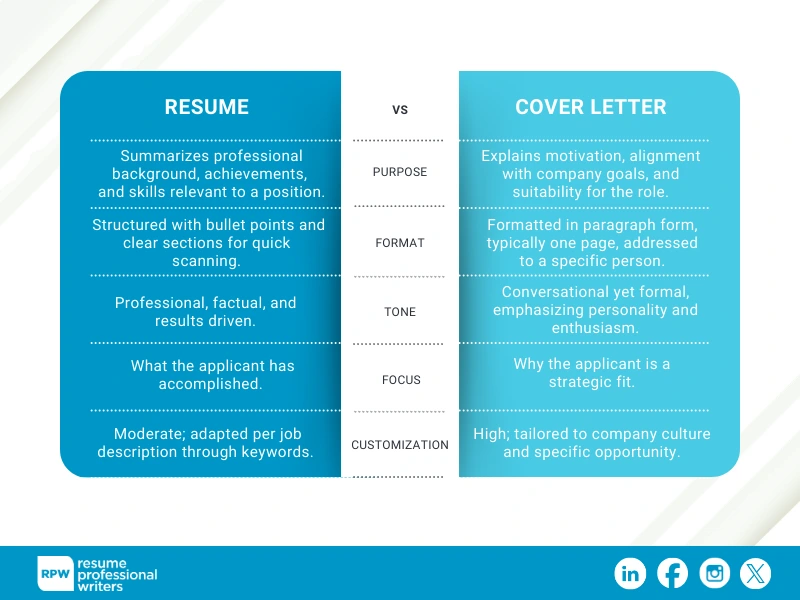
These contrasts highlight that neither document replaces the other — instead, they enhance one another’s purpose. A resume alone cannot convey personal motivation, just as a cover letter lacks the detailed career specifics recruiters require. Together, they portray a complete professional image combining credibility, enthusiasm, and strategic alignment. This integration becomes especially powerful in industries emphasizing culture fit and leadership potential, such as healthcare administration, education, and information technology.
- Resumes emphasize brevity and measurable outcomes: Spearheaded system migration reducing downtime by 45%.
- Cover letters expand those outcomes into context: “This experience strengthened expertise in leading cross-functional IT initiatives to improve business continuity.”
The bridge between quantitative data and qualitative storytelling forms a persuasive narrative that employers remember.
Why Job Seekers Need Both for a Competitive Edge
Job markets across the United States remain competitive in 2026, with Bureau of Labor Statistics data showing millions of openings monthly, yet equally high applicant volumes. Employers increasingly seek both hard and soft qualifications, valuing not only what candidates achieve but how they achieve it.
1. Standing Out in a Competitive Market
Submitting both a resume and a cover letter maximizes visibility and demonstrates superior communication skills — a marker of professional reliability and attention to detail.
2. Screening vs Persuasion
Recruiters often describe the resume as a screening document and the cover letter as a persuasion tool.
- Resume: Automated systems extract keywords to determine match rates.
- Cover Letter: Human reviewers assess fit, personality, and motivation.
Candidates who provide only a resume risk appearing transactional. Those who include both materials convey thorough preparation, professionalism, and genuine interest — often the deciding factor in competitive industries like technology, finance, and public administration.
3. Strengthening Personal Branding
Well-coordinated application materials reinforce credibility and focus. When tone, achievements, and career goals align across both documents, hiring committees perceive the applicant as purposeful.
- Example: An executive emphasizing transformational leadership in a resume can expand in the cover letter on strategic vision or stakeholder engagement achievements that led to measurable growth.
The unified story builds trust even before the first interview.
4. Navigating Specialized Recruitment
The dual submission offers further benefits in specialized recruitment environments.
- Federal applicants using USAJOBS.gov: Keyword-compliant resumes meet strict standards, while cover letters connect competencies (collaboration, strategic thinking, customer service) to real-life examples.
- Healthcare and education: Cover letters demonstrate emotional intelligence and mission-driven commitment — qualities difficult to capture in bullet points.
Structuring an Effective Resume
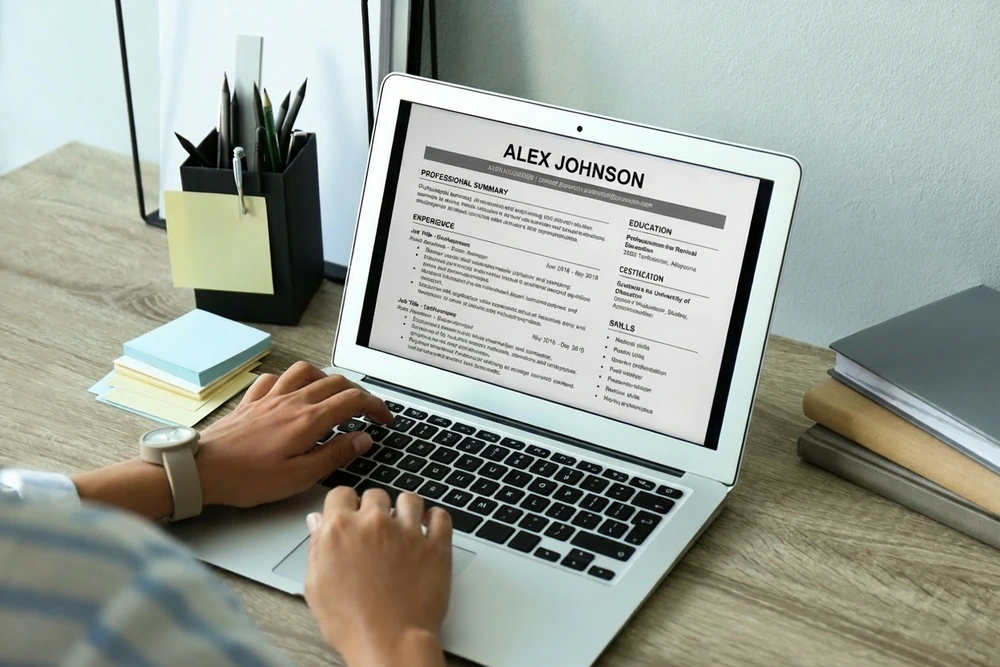
An effective resume follows proven formatting conventions to ensure readability, relevance, and ATS compliance. Most professionals use one of three styles:
- Combination: Blends achievements with career timeline; preferred for flexibility and impact.
- Chronological: Highlights career progression over time; best for steady employment history.
- Functional: Organizes credentials by skill categories; ideal for career changers or industry transitions.
Essential Resume Sections
A resume is a structured, outcome-driven document that highlights your value in a clear, scannable format. Each section plays a distinct role in showcasing qualifications, achievements, and career potential. Together, they create a professional narrative that aligns with employer expectations and passes ATS screening.
- Professional Summary: A compelling opening statement summarizing years of experience, specializations, and value proposition in two to three sentences.
- Core Skills or Competencies: A keyword-rich section listing technical and interpersonal skills aligning with target roles.
- Experience: Achievement-based bullet points starting with strong action verbs and supported by quantifiable metrics.
- Education and Certifications: Academic credentials, licenses, and continuing professional development that reinforce expertise.
- Optional Additions: Sections for awards, volunteer experience, publications, or technical proficiencies where relevant.
Formatting and Design Essentials
A resume’s content is only as effective as its presentation. Clean formatting, modern design choices, and strategic use of space ensure recruiters can scan quickly while applicant tracking systems (ATS) process details accurately.
- Length: One page for early-career professionals; two pages for seasoned executives.
- Readability: White space, modern fonts, and consistent formatting improve recruiter scanning.
- Visuals: Design should complement content, not distract.
- Interactivity: Hyperlinks to portfolios or LinkedIn profiles allow recruiters to verify achievements.
- Executive Highlight: For leaders or specialists, a short section summarizing career highlights (e.g., initiatives led, revenue impacts) can showcase measurable performance.
Above all, factual accuracy and integrity remain essential. Exaggeration or factual inconsistencies can lead to disqualification during background verification. Strategic presentation, not embellishment, drives resume impact. Each entry should demonstrate alignment between role requirements and past success, presented in concise, outcome-based phrasing that communicates both capability and professionalism.
Structuring an Effective Cover Letter
Each cover letter should reflect a well-researched understanding of the employer, written specifically for the position advertised. Recruiters immediately notice when applicants reuse generic templates. Successful letters incorporate relevant company knowledge — recent growth initiatives, industry trends, or product launches — and connect this context to the applicant’s expertise. Addressing the letter to a specific hiring manager rather than using generic greetings also increases engagement rates.
- Opening Paragraph: Introduce professional background and express interest in the position while linking motivations directly to employer impact.
- Middle Paragraph(s): Illustrate two or three specific achievements or skills directly related to the job description, using concise yet powerful storytelling.
- Employer Connection: Demonstrate awareness of company objectives, culture, or market positioning, reinforcing genuine enthusiasm.
- Closing Statement: Summarize value proposition and initiate next steps politely — reinforcing follow-up intent without redundancy.
Formatting should mirror professional correspondence standards — consistent fonts with a one-page limit. Emotional intelligence plays a significant role in tone; phrasing should sound confident rather than presumptive, ambitious yet humble.
Avoid clichés like “team player” or “hardworking professional.” Instead, use concrete examples: “Led a 10-member cross-functional team to launch community outreach initiatives supporting 3,000 participants annually.”
When written thoughtfully, a cover letter acts as a bridge between experience and opportunity, transforming the applicant from a résumé file into a compelling story. Whether applying to a corporate, nonprofit, or federal role, the ability to communicate effectively in a single page often signals leadership potential — a quality that continues to influence modern hiring decisions across every industry sector.
Common Mistakes to Avoid
Even strong resumes and cover letters can lose impact if they contain avoidable errors. Recognizing these pitfalls helps job seekers refine their materials and present a polished, professional image.
- Repetition Between Documents: Many candidates copy resume phrases into their cover letters. Each must serve a unique purpose — one demonstrates achievements, the other contextualizes them.
- Lack of Customization: Submitting a generic or misaddressed letter signals minimal effort. Tailored communication shows genuine interest.
- Keyword Oversaturation: Excessive use of job description terms may appear artificial. Balanced keyword integration maintains authenticity while supporting ATS recognition.
- Lengthy Content or Dense Layouts: Readability remains critical. Recruiters lose interest in overly long paragraphs or compressed text blocks.
- Neglecting ATS Optimization: Creative resumes with complex graphics may fail parsing algorithms, preventing visibility even before review.
Eliminating these errors improves credibility and application outcomes. Professionals should audit both resume and cover letter regularly to ensure content reflects current achievements and desired career direction. Continuous refinement, guided by clarity and strategy, transforms ordinary job materials into compelling narratives that pass both automation and human evaluation.
Integrating Cover Letter and Resume for Maximum Impact
A resume and cover letter are most powerful when they reinforce each other. Together, they signal professionalism, consistency, and strategic communication — qualities employers value highly. By aligning tone, formatting, and messaging, candidates create a unified brand that highlights career progression, measurable achievements, and cultural fit.
Maintaining consistent branding across both documents — from tone and phrasing to formatting — reflects self-awareness and reliability. Recruiters reading a resume and cover letter consecutively should experience a seamless narrative that emphasizes value and alignment with organizational goals. For instance:
- If a resume headline reads “Healthcare Administrator Driving Operational Excellence,” the cover letter may expand this focus through a narrative detailing patient care initiatives or cost-reduction programs.
- When an IT engineer lists “cloud migration expertise,” the letter can describe a successful project outcome: managing risk mitigation during AWS migration or improving uptime metrics.
This contextual overlap provides evidence of authenticity, connecting data points from the resume with tangible professional character.
Consistency also matters in digital environments. Using identical file naming conventions and formatting improves impression management, especially in AI-assisted recruitment. Applicant Tracking Systems (ATS) increasingly evaluate document correlation, scanning metadata, and phrasing for coherence. Harmonized presentation projects dependability, while a mismatched tone or format can weaken branding. Extending this consistency to LinkedIn and professional portfolios further solidifies a unified identity across platforms.
Employers seek candidates who communicate strategically. Aligning both documents ensures every sentence serves a purpose, demonstrating adaptability across formats. This integration shows recruiters a candidate capable of synthesis — presenting measurable results in a resume and persuasive context in a cover letter — just as professionals must tailor communication styles across corporate environments.

Elevate Career Materials for Lasting Professional Growth
Resumes and cover letters remain the cornerstone of effective job search strategies in 2026. Together, they convey competence, authenticity, and intentional branding that foster long-term career progress. By aligning achievements with purpose and presenting information through structured, persuasive storytelling, job seekers distinguish themselves in competitive markets. Many professionals strengthen this process through professional resume writing help delivered by experts skilled in crafting documents that meet both human and AI hiring standards.
Frequently Asked Questions
Should job seekers always include a cover letter with their resume?
Yes. Even when job postings list the cover letter as optional, including one often improves application outcomes. It personalizes the submission and provides an opportunity to explain motivation, career alignment, or unique value. Employers frequently use this letter to gauge communication skills and cultural fit.
What length should an effective resume and cover letter be?
Most employers in the United States expect resumes to be one to two pages, depending on experience, and cover letters to remain under a single page. Concise, focused documents ensure readability and engagement while adhering to modern recruiter preferences within six-second review windows.
Can a resume replace the need for a cover letter in digital applications?
No. While some HR systems do not mandate one, omitting a cover letter often reduces narrative influence. Candidates who explain why their background aligns uniquely with an organization typically outperform those submitting resumes alone. Both files complete the professional presentation essential for selection.
What is the most important difference between a cover letter vs resume?
The resume focuses on objective achievements, while the cover letter conveys personal motivation and alignment with company culture. The former answers “what has been done,” and the latter explains “why it matters,” offering employers both evidence and personality in a comprehensive view.
How often should resumes and cover letters be updated?
Candidates should update both documents annually or whenever major career milestones occur — such as promotions, certifications, or industry changes. Continuous optimization ensures that every application reflects current professional value and remains aligned with real-time market requirements.