


First impressions aren’t made during a handshake—they’re made the moment the applicant walks through the door. And in today’s competitive job market, an outfit can influence first impressions as much as a resume. Employers notice attire as much as credentials. A polished business casual interview attire conveys confidence, adaptability, and cultural fit, while careless clothing can raise doubts before the first question is asked.
Too often, professionals lose opportunities by misjudging what to wear. This guide removes the uncertainty by defining business casual interview attire in 2026, showing how to adapt it across industries, and explaining why presentation directly impacts hiring outcomes. From tech innovators to healthcare administrators, the right outfit strengthens credibility and helps candidates secure the role they deserve.

Understanding Business Casual Interview Attire
“Business casual” remains one of the most misunderstood dress codes in modern workplaces. It blends professionalism with ease, striking a balance between approachability and formality. While interpretations vary across industries, the standard generally avoids full suits yet requires polished, office‑ready clothing.
Recruiters often view this attire as a reflection of how candidates will represent the company’s image and values. When it comes to putting business casual interview attire into practice, the details matter.
- For men, neutral slacks or chinos with button‑down shirts are reliable choices. Blazers add refinement, while ties are optional except in traditionally formal fields like finance or law.
- Most women opt for tailored pants, modest dresses, or knee‑length skirts paired with crisp blouses. Closed‑toe flats or low heels reinforce professionalism without appearing overly formal.
By 2026, business casual will continue to evolve alongside hybrid work norms. Many U.S. employers embrace flexibility yet still expect candidates to appear neat and intentional. A recent SHRM report notes that 73% of employers encourage relaxed dress codes but expect interview attire to remain polished. In short, “casual” should never mean careless.
Successful outfits convey confidence through balance—showing awareness of context without trying to over‑impress. Candidates who review company websites or employee photos beforehand gain valuable insight into expected styles, aligning their look with workplace culture. Ultimately, strong interview outcomes stem from attire that reflects preparation, respect, and situational awareness.

Key Elements of Business Casual Interview Attire
Every business casual look relies on foundational wardrobe elements that ensure consistency, comfort, and credibility. Hiring decisions often hinge on perceived cultural compatibility, and attire remains part of that first impression. The styles below reflect universally accepted standards across leading American industries.
1. Tops and Shirts
For men, collared shirts—whether button-down cotton or subtle patterned varieties—serve as the anchor of business casual dressing. Wrinkle-free fabrics demonstrate care and discipline. Women often opt for blouses or fine-knit sweaters in soft neutral shades such as ivory, navy, or gray. Bright colors work only when muted or coordinated with the rest of the ensemble to maintain balance.
2. Bottoms and Fit
Tailored chinos, straight-leg pants, or pencil skirts remain ideal. Dark, solid tones—navy, black, olive, or khaki—look sharp on camera for virtual interviews as well. Denim generally remains off-limits unless the company explicitly brands itself as casual or creative. For both genders, a proper fit demonstrates attention to detail, while ill-fitted trousers or puckered seams can distract interviewers from the candidate’s message.
3. Footwear
Professional yet understated shoes tie the entire presentation together. Oxford or loafer-style shoes work best for men, while women may choose closed pumps, loafers, or ballet flats. Cleanliness matters—polished shoes indicate reliability. Employers often perceive scuffed footwear or sneakers as signs of haste or neglect, particularly in industries emphasizing professionalism such as consulting or management.
4. Layers and Accessories
Layering’s importance extends beyond weather convenience; it reflects sophistication. A fitted blazer, cardigan, or structured jacket signals readiness. Accessories should remain minimal—a classic watch or delicate jewelry communicates maturity. Large belts, excessive bangles, or branded logos detract from professionalism. Subtlety in detail strengthens visual authority.
These elements unify around polish and personality. The strongest interviewers maintain individuality within professional limits, ensuring that attire supports—not distracts from—their qualifications and communication strengths.
Common Mistakes to Avoid When Dressing Business Casual
Candidates occasionally misjudge boundaries when adopting business casual standards. While intentions may be good, execution often veers from polished to careless. Missteps in attire communicate more than style—they reveal decision-making habits, awareness of expectations, and respect for interviews as professional exchanges.
- Overly informal clothing: Jeans, hoodies, graphic t-shirts, or athletic wear quickly signal disregard for formality, undermining even the most skilled responses.
- Distracting colors or patterns: Neon tones or flamboyant prints can pull attention away from conversation. Harmonious shades maintain focus on dialogue rather than fashion statements.
- Ignoring grooming: Wrinkled fabrics, poorly pressed shirts, or scuffed footwear suggest lack of preparation—unacceptable when competing for roles demanding reliability.
- Over-accessorizing: Excess jewelry, heavy perfume, or bold makeup can overpower the outfit. Moderation ensures a balanced, professional impression.
- Dressing above context: Overly formal suits may appear stiff if the company culture values collaboration and flexibility, conveying possible misalignment with the environment.
Mastering business casual attire involves reading between cultural lines. Candidates can examine leadership photos, event galleries, or company social media for hints about dress expectations. When uncertain, erring slightly more formal remains the conservative and safe decision. Interviews rely on perception; attire that communicates adaptability while respecting professional boundaries proves advantageous.
Adapting Business Casual Style for Virtual Interviews
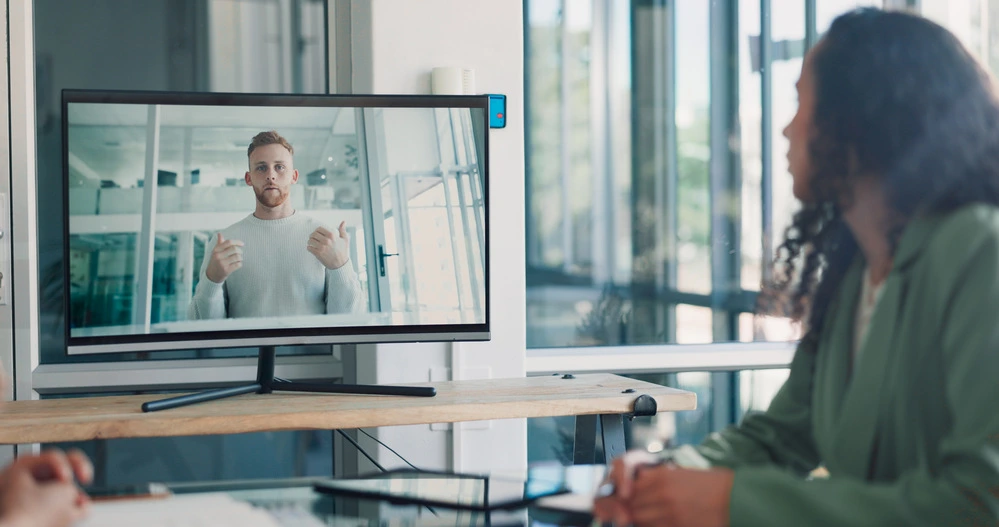
Virtual interviews remain a staple of U.S. hiring landscapes in 2026 and require a nuanced adaptation of business casual attire. Since candidates appear primarily from the torso upward, the top-half presentation becomes crucial. Clean, well-lit visuals combined with polished professional clothing convey attention to digital professionalism—a skill valued in hybrid and remote positions.
Tops That Work Best
- Wear neutral solid colors: These project best on screens, preventing camera glare.
- Avoid busy patterns: Video compression can blur or distract.
- Choose structured blouses or collared shirts: These create a sharp contrast against simple backgrounds, helping recruiters focus on expression and confidence.
- Skip pure white: It can wash out under lighting,
- Consider pastel or mid-tone blues: These flatter most complexions under artificial light.
Don’t Ignore the Bottom Half
- Even if unseen, lower-body attire still matters psychologically. Dressing fully aligns the mindset with professionalism.
- HR analysts frequently note sharper articulation of responses from candidates who dress completely for online interviews than from those in partial outfits.
- Maintaining this habit boosts composure and engagement throughout discussions.
Accessories and Frame Discipline
- Accessories such as headsets or glasses should appear neat and proportionate.
- Avoid visual clutter within the camera frame; minimalistic aesthetics reinforce discipline.
- Lastly, keep a simple background. It helps recruiters focus on your expression and confidence.
This remote-ready variation of business casual interview attire continues to dominate digital-era recruitment pipelines, ensuring candidates project technical readiness and professionalism in every pixel.
Industry Variations in Business Casual Expectations
Although business casual holds a universal guideline, interpretation shifts across industries. Job seekers stand out when tailoring attire choices to suit each field’s cultural rhythm. Understanding these nuances demonstrates not just style, but strategic awareness—an attribute many U.S. employers actively seek in modern hiring.
| Industry | Recommended Business Casual Style |
|---|---|
| Information Technology | Polished denim or chinos, tucked shirts or polo tops, simple blazers; comfort blended with neat organization. |
| Healthcare Administration | Conservative pants or skirts, neutral blouses, professional cardigans; hygienic and approachable appearance prioritized. |
| Finance and Accounting | Structured slacks, collared shirts with blazers; refined color schemes emphasizing precision and integrity. |
| Marketing and Creative Fields | Stylish separates, modern cuts, and unique accessories that hint at personality without violating professionalism. |
| Education and Public Sector | Comfortable yet tidy outfits with modest coverage; practical footwear suitable for long hours or movement. |
Key Takeaways
- Flexibility matters most in creative and technology-driven environments, but candidates should still avoid extremes.
- Conversely, conservative careers—law, banking, or government—respect more traditional boundaries. A tailored jacket or muted palette communicates discipline valued by those sectors.
- For transitioning professionals or career changers, mirroring attire expectations of the target industry accelerates perception compatibility.
Aligning attire with prevailing values signals emotional intelligence and preparedness to integrate smoothly into workplace norms. When recruiters instantly perceive that a candidate “fits,” they can focus on evaluating qualifications rather than presentation. Hence, clothing choices efficiently reinforce overall career storytelling.
The Psychology of Appearance in Interviews
Professional presentation transcends fashion—it shapes cognitive biases. Numerous behavioral studies show that first impressions form within seconds, and nonverbal cues, including attire, play a major role in how competence and trustworthiness are judged. Business casual interview attire works optimally when it lends approachability and authority—qualities hiring managers instinctively value.
Color Choices and Emotional Signals
- Psychologists link subtle aspects such as color choice to emotional response.
- Blue often conveys dependability.
- Gray communicates intellect.
- Black emphasizes control.
- However, overuse of dark tones may appear uninviting. Integrating warmth through balanced hues—such as beige or light blue—enhances friendliness without diminishing professionalism. Employers subconsciously respond to these signals when assessing fit.
Enclothed Cognition Principle
- The “enclothed cognition” principle demonstrates how external presentation uplifts internal state. This supports the belief that dressing well improves self-perception. Candidates frequently deliver stronger answers when confident in their appearance.
A composed demeanor paired with appropriate attire amplifies communication clarity, helping applicants sustain consistent engagement throughout their interviews.
Business Casual Options for Different Seasons
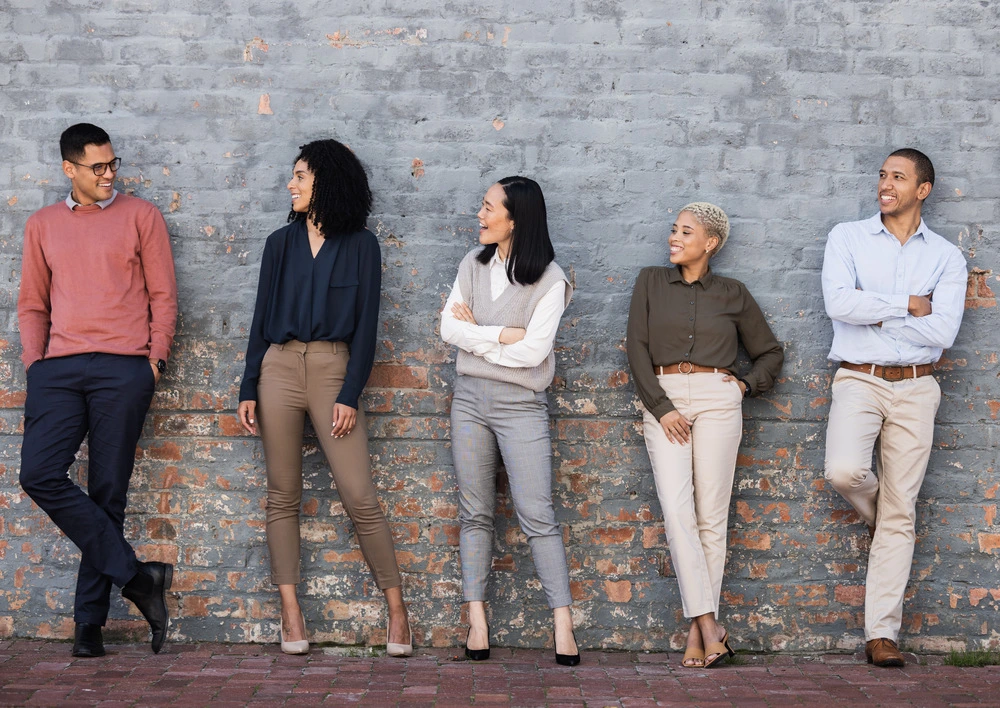
Seasonal awareness distinguishes adaptable professionals from those appearing unprepared. Choosing materials and layers that match weather conditions without compromising neatness conveys practical intelligence—highly regarded in interviews. In the United States, where regional climates vary widely, this consideration proves especially valuable.
Spring and Summer
- Lightweight cotton or linen separates prevent overheating while maintaining breathability.
- Pastel or light neutral shades appear fresh and seasonally appropriate.
- However, overly casual summer staples—sandals, tank tops, or short skirts—remain unsuitable for interviews.
- For men, short-sleeved button-downs tucked into slacks pair well with loafers. Women can style short-sleeved blouses with structured skirts or cropped blazers for a refined warm-weather look.
Fall and Winter
- Wool-blend trousers, turtlenecks, and dark blazers dominate cooler months.
- Layering becomes both functional and fashionable.
- Deep-toned outfits—burgundy, navy, or charcoal—project sophistication.
- Women often prefer knee-length boots with dresses and tights, maintaining warmth without compromising style. Men might choose subtle plaids or tweeds to introduce texture while preserving professional appeal.
Weather preparation reflects foresight—a valued attribute in all professional settings. Arriving shivering or sweating may distract focus from conversation, so season-conscious dressing secures physical comfort and sustained composure during interviews.
How Outfit Coordination Strengthens Career Branding
Interview attire directly supports personal branding strategies. Business casual tones, fabric selections, and fits can visually reinforce the attributes described on a resume or cover letter.
Attire as a Branding Tool
- Analysts seeking to showcase precision may choose structured clothing with minimal detail
- Marketers may highlight creativity through tasteful color accents or unique accessories.
Consistency Builds Trust
- Recruiters appreciate seamless narratives. When resume materials, tone, and interview attire align, candidates appear authentic rather than performative. This consistency bolsters memorability, helping hiring managers see genuine fit. Each detail, therefore, becomes an opportunity to underscore professional value.
Attire as a Communication Layer
- Job seekers who consistently invest in both verbal articulation and visual impressions tend to receive more follow-up interviews. Attire serves as an active communication layer, reaffirming compatibility with the employer’s envisioned culture.
Integrating thoughtfulness in appearance transforms “just another applicant” into a strong contender exemplifying composure and intent.
Preparing from Head to Toe: A Final Checklist
1. Confirm company culture: Observe photos, videos, and professional events online to gauge expected attire levels.
2. Lay out outfits early: Visualizing combinations helps detect wrinkles, stains, or fit issues before the big day.
3. Check lighting for virtual setups: Test camera appearance to verify colors appear balanced and professional.
4. Mind grooming consistency: Hair, nails, and facial hair should complement the polished integrity of the outfit.
5. Limit fragrance and accessories: Clean, neutral finishes build a professional presence without imposing personal style on the interviewer’s space.
6. Maintain posture and confidence: Even the perfect outfit underperforms without assured body language—another vital form of nonverbal communication.
Practicing these details converts preparation into performance readiness. Success in business casual presentation requires self-awareness, context understanding, and execution—all core attributes employers value during recruitment evaluation.
Elevate Professional Confidence with Expert Support
A thoughtful wardrobe reinforces credibility, but enduring interview success relies equally on strategic self-marketing through resumes and career materials. Many job seekers strengthen their professional stories with professional resume writers who align presentation with market demands and employer expectations. Together, preparation and polish turn opportunity into achievement.
Frequently Asked Questions
What qualifies as business casual interview attire in 2026?
Business casual interview attire in 2026 includes wrinkle-free slacks, chinos, skirts, or dresses paired with professional shirts or blouses. Jackets, blazers, and neat, closed-toe shoes refine the look. Companies now favor a comfortable yet composed appearance that balances modern flexibility with professionalism.
Can jeans ever be considered business casual for interviews?
Jeans can only be considered appropriate if the employer explicitly promotes a relaxed dress code, such as certain startups or creative agencies. In those cases, dark, non-distressed denim paired with a sharp blouse or blazer can function acceptably. Otherwise, traditional pants or skirts remain safer choices for interviews.
How should candidates choose colors for business casual attire?
Neutral shades such as navy, taupe, gray, and black remain reliable. Accent tones like light blue or muted green can express professionalism while avoiding monotony. Bright or neon colors distract from credibility, while dark monotones may appear overly stern. Balanced color coordination maintains visual harmony and confidence.
Are sneakers acceptable for a business casual interview?
Sneakers generally remain inappropriate unless interviewing in fashion or tech startups that define them as part of culture. Clean loafers or professional shoes better match expectations. Employers typically interpret formal footwear as a sign of respect for the meeting and interest in the role.
How does business casual differ for virtual versus in-person interviews?
In virtual interviews, emphasis shifts toward the visible upper body—shirt, jacket, grooming, and lighting quality. However, full professional dressing still improves confidence and mental readiness. In-person interviews require attention to footwear, posture, and complete silhouette presentation.