


To stand out as an accounting manager, it takes more than number-crunching—employers look for strategic thinkers with regulatory know-how and the ability to guide diverse teams toward organizational success. Yet, many accounting professionals who strive to advance their careers often face the challenge of balancing technical expertise with leadership responsibility.
Hiring teams expect precision, compliance, and leadership alignment with financial integrity standards. As such, accounting professionals who aspire to advance to management roles must showcase strategic oversight and strong knowledge of corporate financial systems, which can be challenging to convey effectively through applications and interviews.
This guide breaks down the modern accounting manager job description: key responsibilities, essential skills, salary outlook, and industry demand. It also highlights the educational pathways and certifications that boost credibility in 2026’s competitive financial landscape.

Overview of the Accounting Manager Role
The accounting manager serves as the pivotal link between executive leadership and the accounting team, overseeing financial reporting, internal controls, and budgetary processes across an organization. This role ensures financial data accuracy, compliance with set-forth regulations, and timely reporting to support decision-making across departments.
Most accounting managers report directly to a controller, finance director, or chief financial officer (CFO). They lead teams composed of accountants, analysts, and bookkeepers, ensuring consistent performance and adherence to corporate standards. As such, the role combines technical expertise with leadership and compliance oversight, requiring both analytical and communication strengths. The position also demands mastery of Generally Accepted Accounting Principles (GAAP), knowledge of tax regulations, and proficiency with enterprise resource planning (ERP) systems like Oracle NetSuite, SAP, and QuickBooks Enterprise.
The Bureau of Labor Statistics (BLS) reports steady growth in management-level accounting positions driven by regulatory changes, business expansion, and technological integration into corporate finance systems. As a result, job opportunities for accounting managers continue to expand. To remain competitive, resumes should align with the qualities emphasized in modern accounting manager job descriptions.
Integrity, precision, and leadership discipline remain core expectations for the accounting manager since they often manage multi-million-dollar budgets. Employers also value professionals capable of translating numerical insights into strategic recommendations that influence profitability and reduce risk exposure. As automation reshapes transaction-level processes, the accounting manager description increasingly emphasizes analytics, forecasting, and financial governance. Highlighting these traits ensures candidates stand out in a crowded field.
Accounting Manager Job Description and Key Responsibilities
Accounting managers oversee critical financial operations that sustain transparency, compliance, and efficiency. The scope of responsibilities varies depending on company size, but certain foundational duties remain consistent across industries.
1. Financial Reporting and Analysis
Accounting managers oversee monthly, quarterly, and annual closing processes; prepare income statements, balance sheets, and cash-flow statements; and ensure compliance with GAAP and external audit requirements.

2. Budget Management
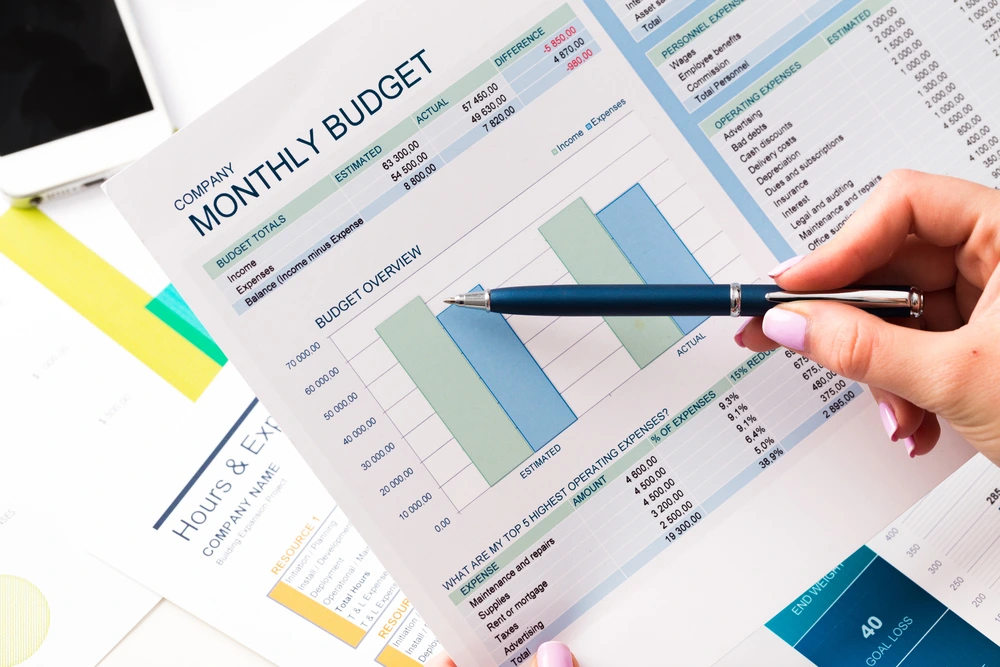
They coordinate the annual budgeting process, monitor variances, guide leadership on resource allocation to optimize fiscal performance, and recommend corrective actions that keep spending aligned with company goals.
3. Internal Controls and Compliance
These professionals establish and maintain internal audit systems to prevent fraud, enforce accuracy, and ensure adherence to tax, payroll, and regulatory frameworks, including SOX compliance for public companies.

4. Process Improvement
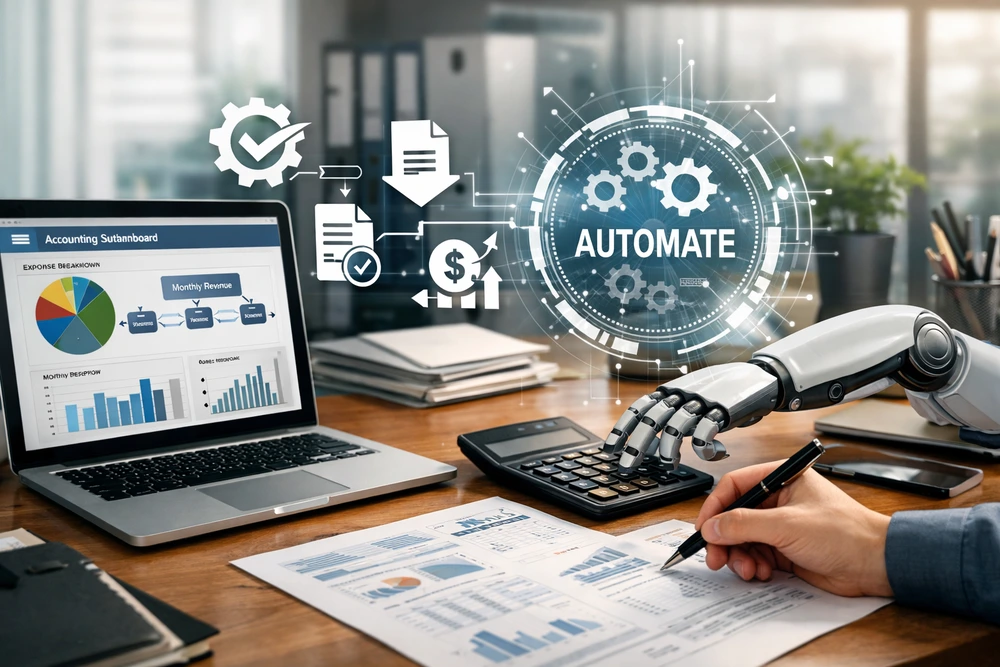
Accounting managers analyze existing workflows, implement automation tools, and refine processes to increase reporting speed and consistency, reduce errors, mitigate risks, and enhance productivity.
5. Team Leadership and Supervision
Supervising accountants and finance staff, they deliver training, performance reviews, and mentorship to ensure accurate financial data entry, performance excellence, and alignment with organizational priorities.

6. Cross-Department Collaboration
They work closely with operations, HR, and procurement leaders to align financial practices with overall company strategy.

7. Regulatory Filings
They ensure timely completion of tax obligations and compliance reports, often collaborating with external auditors and regulatory agencies.

Strong analytical thinking, adaptability, and proficiency in enterprise resource planning (ERP) systems distinguish top performers in this role. Many organizations now expect accounting managers to participate in digital transformation projects, integrating artificial intelligence (AI) tools for data analysis or predictive modeling.
Essential Skills and Competencies
To excel in the accounting manager job description, professionals must balance technical, analytical, and interpersonal skills. Competency across these areas ensures smooth department operations and accurate reporting. In addition to accounting expertise, exceptional communication and leadership abilities define success in this management tier.
1. Technical Proficiency
Mastery of accounting software such as QuickBooks, Oracle NetSuite, SAP, or Microsoft Dynamics is essential, along with familiarity with cloud-based accounting solutions.
2. Regulatory Knowledge
Accounting managers must stay informed about evolving GAAP standards, Sarbanes–Oxley (SOX) compliance, and Internal Revenue Service (IRS) guidelines impacting financial reporting.
3. Analytical Capability
They interpret complex data sets to identify trends, risks, and improvement opportunities that affect business growth.
4. Leadership and Delegation
Strong management ensures department efficiency, morale, and consistent delivery against corporate performance metrics.
5. Communication and Presentation
Accounting managers frequently present reports to senior executives, requiring the ability to explain complex financial concepts in accessible, strategic terms.
6. Problem-Solving and Critical Thinking
Identifying discrepancies or inefficiencies in accounting systems demands confident judgment, strategic thinking, and data-driven decision-making.
Modern employers also seek digital fluency, particularly in advanced Excel analytics, business intelligence platforms, and predictive modeling tools. These technical skills enable managers to produce actionable financial insights beyond traditional bookkeeping functions.
Educational Requirements and Certifications
Most accounting managers hold at least a bachelor’s degree in accounting, finance, or business administration from an accredited institution. A master’s degree in business administration (MBA) or accounting often provides a competitive advantage, particularly in large organizations and public accounting firms.
• Certified Public Accountant (CPA)
Widely regarded as the gold standard for accounting professionals in the United States, this certification demonstrates mastery of advanced accounting principles and compliance ethics.
• Certified Management Accountant (CMA)
Awarded by the Institute of Management Accountants (IMA), this credential validates expertise in managerial accounting and decision support.
• Certified Internal Auditor (CIA)
Offered by the Institute of Internal Auditors, this designation reflects deep proficiency in internal control assessments and organizational risk management.
• Chartered Financial Analyst (CFA)
Although more investment-focused, this credential benefits accounting managers engaged in financial planning and analysis roles.
Employers often prefer CPA-certified professionals for leadership positions due to their demonstrated understanding of audit performance and regulatory standards. When combined with years of general accounting experience, these credentials strengthen credibility and earning potential considerably.
Work Environment and Reporting Structure
The accounting manager job description often places professionals in structured environments characterized by strict data integrity standards and tight reporting deadlines. They work in corporate headquarters, regional offices, and shared service centers, depending on the company’s structure.
While many employers maintain traditional office-based roles, hybrid and remote accounting management positions have increased significantly, particularly across technology and healthcare sectors. The position’s environment demands high concentration, extended fiscal-year-end hours, and collaboration across divisions like human resources, operations, and procurement.
Industries with the highest demand for roles outlined in an accounting manager job description include:
- Financial Services
- Manufacturing
- Healthcare Administration
- Information Technology
In these environments, accounting managers balance daily operations oversight with strategic forecasting. Within corporate finance divisions, they often partner with business intelligence teams to identify revenue trends, optimize departmental budgets, and streamline compliance audits.
Professionals in this role frequently attend board-level presentations or audit meetings. They are trusted advisors shaping budgets, forecasting results, and recommending financial efficiency improvements. With experience, an accounting manager can ascend to director or controller roles, managing multimillion-dollar budgets and overseeing nationwide or global reporting systems.
Salary Outlook and Job Market Trends
Accounting managers command strong salaries due to their technical expertise and leadership responsibilities. According to the latest U.S. Bureau of Labor Statistics data, financial managers—including accounting managers—earn a median annual wage exceeding $155,000 in the United States. Compensation varies based on industry, geography, company size, and professional certification status.
| Experience Level | Average Salary Range |
|---|---|
| Entry-Level (up to 5 years) | $85,000–$100,000 |
| Mid-Level (5–10 years) | $105,000–$130,000 |
| Senior Accounting Manager | $135,000–$160,000+ |
Accounting professionals with advanced technical acumen—particularly in data analytics, automation, and compliance—experience faster promotions and higher compensation. With consistent demand for accountability and fiscal transparency, the occupation remains resilient against economic fluctuations.
Industries such as finance, manufacturing, and information technology often provide higher compensation ranges than nonprofit or small business employers. Remote roles and consulting-based accounting management positions also continue to rise in competitiveness, with strong demand for financial process modernization and regulatory compliance expertise.
As digital transformation reshapes accounting workflows, a competitive accounting manager job description in 2026 highlights the need for advanced education, certifications, leadership skills, data visualization skills, and proficiency in automated financial reporting tools. Professionals who embrace innovation in AI or robotic process automation (RPA) systems command higher salaries than traditional peers who focus solely on transactional tasks.
Career Path and Advancement Opportunities

Career progression for an accounting manager generally follows a structured path, beginning with roles such as staff accountant, senior accountant, and then promotion into a supervisory position. From there, leadership advancement may lead to positions such as controller, finance director, or chief financial officer (CFO). Those specializing in niche areas—like corporate tax, mergers and acquisitions, or international accounting—can transition into consulting or executive leadership.
1. Controller
Oversees all accounting operations and financial reporting for the organization.
2. Finance Director
Aligns accounting policies with broader business strategies and forecasts.
3. Chief Financial Officer (CFO)
Leads financial planning, investor relations, and organizational strategy.
4. Consultant or Auditor
Provides external financial advice or compliance evaluations across industries.
Continuous professional development through online courses, certifications, and leadership programs strengthens promotional prospects. Organizations are now increasingly focusing on leadership diversity, digital innovation, and sustainability—giving accounting managers opportunities to influence corporate ethics, ESG reporting, and financial modernization.
How to Craft a Competitive Accounting Manager Resume
An effective resume for an accounting manager highlights technical expertise, quantifiable results, and leadership outcomes. Hiring teams prioritize metrics such as cost reduction, audit accuracy, and process efficiency. Strategic resume optimization and alignment with job-specific keywords also significantly improve visibility within applicant tracking systems (ATS).
- Emphasize Achievements: Showcase quantifiable results such as closing books five days early, reducing reporting discrepancies, or leading ERP integration that enhanced data accuracy.
- Incorporate Key Skills: Include financial forecasting, team leadership, audit control, and compliance enforcement as primary keyword phrases.
- Tailor Content: Reflect industry-specific metrics, whether manufacturing variance analysis or healthcare reimbursement compliance.
- Use Modern Formatting: Apply clear section headings, consistent tense, and ATS-readable design for maximum pass-through rates.
- Highlight Certifications: Listing CPA, CMA, or other credentials signals professional mastery and dedication to continuous growth.
Job seekers can enhance employer engagement and shorten job searches by coupling strong résumés with tailored leadership summaries. Measurable results—expressed through percentages, cost savings, and process improvements—position candidates as strategic contributors rather than merely technical supervisors.

The Evolving Outlook for Accounting Manager Job Description
Technology-driven transformation and AI are reshaping accounting management, automating routine tasks through artificial intelligence and machine learning tools. This shift allows accounting managers to focus on interpreting data, risk management, and strategic planning.
As digital infrastructures grow, expertise in data governance, ESG reporting, and global compliance is now more valuable than ever. Employers now prioritize those professionals who demonstrate modern accounting manager job description, which includes thriving in hybrid roles and the ability to combine business insight with technical fluency, adaptability, and continuous learning.
With ongoing economic diversification and increased emphasis on accountability, accounting managers remain integral to both private enterprise and public governance. Their blend of analytical insight and ethical stewardship positions them as critical assets in shaping financial sustainability and corporate reputation.
Empower Your Accounting Leadership Career for Long-Term Success
Accounting managers occupy one of the most pivotal roles in safeguarding organizational integrity and growth potential. They thrive when technical mastery meets strategic vision—but standing out requires more than expertise. Those seeking to elevate their professional presentation can strengthen their market value through professional resume writing help that aligns credentials and achievements with modern employer expectations in finance and accounting leadership.
Take the next step—position yourself as the accounting leader every organization needs.
Frequently Asked Questions
What are the main responsibilities of an accounting manager?
An accounting manager oversees financial reporting, budget management, and internal controls. The role includes team supervision, compliance monitoring, and financial data verification to ensure corporate integrity and accurate reporting for decision-making across departments.
How much do accounting managers earn in 2026?
According to the latest salary aggregates from PayScale and the U.S. Bureau of Labor Statistics, most accounting managers in 2026 earn a median annual wage exceeding $155,000, with senior-level or credentialed professionals earning over $160,000 in metropolitan markets.
What education is required to become an accounting manager?
Most organizations require a bachelor’s degree in accounting, finance, or business administration. Many employers also prefer candidates with Certified Public Accountant (CPA) credentials or an MBA for advanced leadership roles.
Is the demand for accounting managers growing?
Yes. The Bureau of Labor Statistics forecasts steady growth for accounting managers as organizations continually emphasize financial transparency, data analytics, and digital automation across financial departments nationwide.
What skills make a successful accounting manager?
Successful accounting managers possess strong analytical, leadership, and communication skills, combined with advanced technical knowledge of ERP systems, GAAP compliance, and financial forecasting. Strategic thinking and adaptability to new technologies also play vital roles.