


A hiring manager is the person responsible for filling a role on a team. They decide what the team needs, assess candidates, and often make or recommend the final choice.
This guide explains what hiring managers do, how they work with recruiters, and how to prepare for an interview with one.

What Is a Hiring Manager?
The hiring manager understands the work the new hire will do. They use that knowledge to set priorities for the role and evaluate how candidates would handle the work.
Link Between Company Needs and Talent: Hiring managers evaluate more than technical qualifications. They assess cultural fit, leadership potential, and alignment with organizational objectives. Their decisions directly influence profitability, innovation, and team performance.
Hiring decisions: The hiring manager usually helps write the job description and interview candidates. Final approval may also involve HR, a panel, or another leader.
Team knowledge: Hiring managers often supervise the role or lead its department. They can explain what the work looks like and what a successful hire needs to accomplish.
In practical terms, a hiring manager might be:
- A lead nurse evaluating RN applicants in a hospital unit.
- A director assessing financial analysts.
- A principal selecting a new teacher.
Recognizing their influence allows job seekers to tailor resumes and interviews toward the hiring managers’ expectations, not just HR keywords.

Key Responsibilities of a Hiring Manager
Hiring managers help define the role, interview candidates, and plan how the new hire will get started.
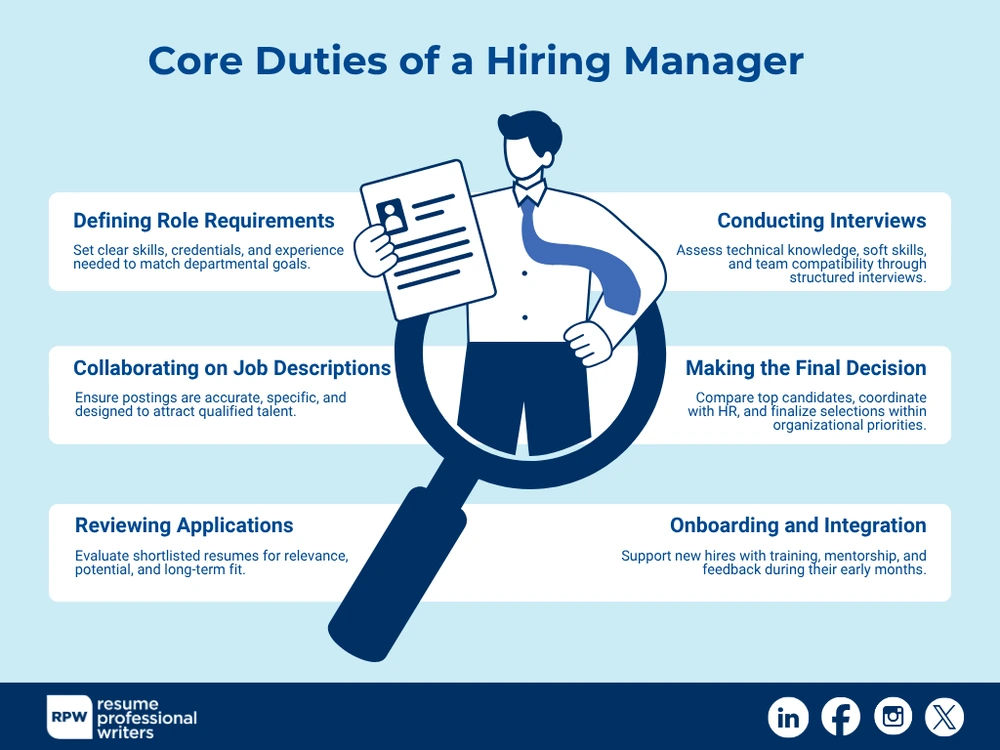
Their core responsibilities include:
- Defining Role Requirements: Hiring managers determine the skills, credentials, and experience levels required for a position, ensuring alignment with departmental goals and working conditions.
- Collaborating on Job Descriptions: Their insights ensure job postings are specific, accurate, and strategically designed, helping recruiters attract qualified talent.
- Reviewing Applications: Once resumes pass ATS screening, hiring managers evaluate shortlisted candidates based on job relevance, performance potential, and long-term fit.
- Conducting Interviews: Through structured and behavioral interviews, they assess technical knowledge, soft skills, and compatibility of applicants with team dynamics.
- Making the Final Decision: Hiring managers compare top contenders, negotiate with HR, and finalize selections based on performance metrics, compensation limits, and organizational priorities.
- Onboarding and Integration: Post-hire, they ensure the new employee receives adequate training, mentorship, and feedback during the initial months.
Recruiters and HR help coordinate the process. The hiring manager explains what the team needs and evaluates evidence of relevant skills.
Recruiter vs. Hiring Manager: Key Differences
Recruiters and hiring managers both play essential roles in the recruitment process, but their responsibilities and perspectives differ significantly. Recruiters act as facilitators of the hiring pipeline, managing multiple vacancies at once. Their focus is on sourcing candidates, conducting preliminary interviews, and handling administrative tasks such as background checks or preparing offer letters.
The hiring manager focuses on whether candidates can do this particular job. They may ask how you solved a similar problem or what you learned from a project.
Side-by-Side Comparison
| Aspect | Recruiter | Hiring Manager |
|---|---|---|
| Role Focus | Sourcing and screening job applicants | Evaluating and selecting qualified candidates |
| Primary Objective | Build a diverse pool of potential hires | Fill a specific position effectively |
| Level of Involvement | Early to mid-stages of the hiring process | Throughout interviews to final decision |
| Perspective | Company-wide hiring efficiency | Departmental performance and cultural alignment |
| Final Decision Authority | Provides recommendations | Issues the official hiring approval |
When speaking to a recruiter, explain how your background matches the basic requirements. For the hiring manager, prepare examples that show how you would do the work.
Skills and Traits of Effective Hiring Managers

Research from the Society for Human Resource Management indicates that recruitment strategies incorporating managerial input can reduce voluntary turnover by as much as 30%. Organizations with strong hiring managers therefore tend to foster greater stability, higher job satisfaction, and stronger opportunities for employee growth.
A hiring manager sets expectations by describing the work clearly, giving candidates time for questions, and applying the same criteria across interviews.
Look for these qualities in how a manager interviews, gives feedback, and makes decisions.
- Strategic Thinking: Job seekers benefit most from hiring managers who align recruitment objectives with business strategy. They understand how each role contributes to profitability, innovation, and operational continuity, ensuring that every hire supports measurable outcomes.
- Communication: Clear communication is essential. Effective hiring managers set expectations, provide feedback, and establish performance goals during interviews and onboarding. This clarity reduces misunderstandings and accelerates integration into the team.
- Decision-Making: Hiring decisions require balancing data-driven evaluation with intuition about team synergy and leadership potential. Managers who master this balance minimize risk while maximizing return on investment in talent.
- Bias Awareness: Unconscious bias can undermine fairness and diversity. Strong hiring managers recognize these risks and actively mitigate them, ensuring evaluations are equitable and outcomes support organizational inclusivity.
- Time Management: Recruitment timelines directly affect productivity. Effective hiring managers coordinate schedules efficiently, preventing delays while maintaining departmental performance.
An effective hiring manager explains what success looks like and asks for evidence that relates to the job.
The Hiring Process from a Manager’s Perspective

The process usually starts with defining the role and continues through interviewing, selection, and onboarding.
1. Identifying the Need
Hiring managers recognize performance gaps or growth opportunities, then work with HR to define the role, update job descriptions, and set compensation benchmarks.
2. Partnering with Recruiters
Once the position is approved, recruiters source candidates. The hiring manager reviews resumes, focusing on relevance, potential, and alignment with departmental priorities.
3. Leading the Interview
During the interview phase, hiring managers assess candidates’ ability to contribute meaningfully to current projects and future growth. They develop practical scenarios, case analyses, or technical assessments to evaluate both technical expertise and adaptability.
4. Making the Selection
Post-interview, hiring managers compare candidates against consistent criteria such as communication, problem-solving, cultural fit, and readiness to embrace company values. They collaborate with HR to finalize offer conditions, approve salaries, and set start dates.
5. Driving the Onboarding
After you start, the hiring manager may help set priorities, arrange training, and check how you’re settling in. Ask what they want you to learn or accomplish in your first month.
Expert Tip
Job seekers who recognize this workflow can engage more effectively during interviews.
Align your interview responses with the manager’s priorities—such as productivity goals, team dynamics, and business outcomes.
This demonstrates that you’re not just qualified on paper but also prepared to contribute meaningfully to the organization, making you a stronger contender in a competitive market.
How Job Seekers Can Appeal to Hiring Managers
To capture the attention of a hiring manager, candidates must tailor their resumes, cover letters, and interviews toward measurable outcomes. Hiring managers value applicants who demonstrate how their expertise translates into improvements in revenue, workflow efficiency, client satisfaction, or innovation. Concrete metrics and role-specific keywords make these connections clear and persuasive.
The following strategies highlight how applicants can demonstrate measurable value and position themselves as strong contenders:
Customize the Application
Align achievements with the company’s strategic objectives rather than listing generic responsibilities. This demonstrates awareness of organizational priorities and positions the candidate as a contributor to long-term success.
Highlight Collaboration
Hiring managers prioritize individuals who can integrate into existing teams, handle challenges proactively, and foster accountability. Evidence of teamwork and adaptability signals readiness for departmental alignment.
Demonstrate Problem-Solving
Cite examples of cost savings, project efficiencies, or client impact to resonate with data-driven managers. These outcomes show the ability to reduce risk and deliver tangible value.
Show Professional Growth
Highlight evidence of certifications, leadership roles, or continuous training. Hiring managers view professional development as a marker of long-term potential, resilience, and adaptability in evolving industries.
Engage with Confidence
Assertive communication, balanced with receptiveness to feedback, builds trust early in the process. Confidence underlines preparedness, while openness signals collaborative potential.
Expert Tip
Hiring managers appreciate applicants who respect their time and come prepared with thoughtful insights.
Ask intelligent questions about performance expectations or departmental goals demonstrates initiative. Employers view such traits as indicators of readiness for collaborative success.
Prepare materials that reflect the hiring manager’s priorities to gain a competitive edge ahead of less strategic applicants.
Industry Variations in the Hiring Manager Role
What matters to a hiring manager depends on the job. A hospital may look for a license, while a warehouse may ask about safety procedures and shift schedules.
| Industry | Managerial Hiring Priorities |
|---|---|
| Healthcare | Licensure verification, patient safety, and adherence to federal healthcare compliance standards. |
| Information Technology | Certifications, coding proficiency, cybersecurity awareness, and collaboration in agile environments. |
| Finance | Accuracy, ethics, and data integrity under regulatory guidelines like Sarbanes-Oxley. |
| Education | Subject expertise, teaching credentials, student engagement strategies, and assessment results. |
| Engineering | Project management capability, safety compliance, and innovation under time constraints. |
Understanding these distinctions enables job seekers to tailor their approach and speak the managerial language that resonates most strongly in their field. For instance:
- Healthcare: A hiring manager in a hospital setting is less concerned with broad leadership skills and more focused on whether you can deliver safe, regulation-compliant care. Emphasize clinical precision and compliance when applying.
- Information Technology: Tech directors often prioritize adaptability. Highlight certifications, but also show how you thrive in dynamic, fast-paced environments where innovation and security are equally critical.
- Finance: Here, risk management is paramount. Hiring managers want evidence of ethical decision-making and accuracy under pressure. Demonstrating familiarity with compliance standards can set you apart.
- Education: Principals and department heads look for candidates who can balance subject expertise with student engagement. Show how your teaching strategies translate into measurable outcomes.
- Engineering: Hiring managers in this field value efficiency and innovation. Stress your ability to manage projects under tight deadlines while maintaining safety and quality standards.
For professionals transitioning between industries, the focus must be on transferable achievements. For example:
- Problem-solving skills in IT can translate into process optimization in finance.
- Leadership in education can demonstrate team management potential in healthcare.
- Project management in engineering can highlight organizational skills applicable across sectors.
By framing experience in terms of measurable outcomes and risk reduction, candidates demonstrate awareness of managerial priorities—even outside their original field. This approach signals adaptability and strategic value to hiring managers across industries.
Optimizing Communication with Hiring Managers
Keep your cover letter and follow-up short. Name the role, explain why you’re interested, and give an example of work that fits the job.
To achieve this, candidates can apply several proven communications strategies:
- Email Etiquette: Concise subject lines and structured content convey professionalism and attention to detail.
- Follow-Up Strategy: Timely gratitude emails reinforce interest while offering one additional insight that strengthens candidacy.
- LinkedIn Engagement: Thoughtful engagement on professional platforms can establish familiarity even before interviews occur.
- Confidence Under Pressure: Calm and articulate communication underlines emotional intelligence—an attribute hiring managers value highly.
If you want to stay in touch after an interview, thank the hiring manager for their time. Mention one thing you learned about the team or role.

Why Understanding Hiring Managers Boosts Career Success
Read the job posting before you apply. Pick one or two examples that show how you can do the work the hiring manager needs. Include a measurable result if you have one.
Ultimately, hiring managers seek contributors who will make both immediate and sustainable impacts. Understanding their perspective allows job seekers to balance qualifications with workplace compatibility. Those who anticipate managerial needs stand out in applicant tracking systems, interviews, and final reviews. Many professionals achieve stronger results with professional resume writing help that communicates achievements in ways hiring managers respect and remember.
Frequently Asked Questions
Who is considered the hiring manager in an organization?
A hiring manager helps choose who fills an open role. They often lead the team you would join. They decide what skills the team needs and assess how your experience fits.
Do hiring managers and recruiters work together?
Yes. Recruiters handle sourcing, initial screening, and coordination, while hiring managers evaluate fit and choose the final candidate. This collaboration ensures hiring quality and compliance while aligning staffing with organizational goals.
Can a hiring manager override HR decisions?
In most cases, the hiring manager holds final approval authority within the boundaries of HR policy. Human resources professionals provide guidance and manage logistics, but the manager’s judgment dictates which applicant best fulfills operational needs.
What do hiring managers look for in resumes?
Hiring managers prioritize measurable achievements, relevant experience, and clear evidence of value contribution. Resumes that align with the position’s goals, include quantified results, and reflect professional growth stand out most effectively.
How can job seekers connect with hiring managers before applying?
Professionals often reach hiring managers through targeted networking on LinkedIn, industry forums, or referrals. Demonstrating awareness of the company’s needs and engaging respectfully in professional discussions can increase visibility before the application stage.