

For many job seekers, a sales associate is an entry-level role that serves as the gateway to a career that blends customer connection with business success. Yet countless applicants stumble when trying to show hiring managers they have what it takes. The secret isn’t just listing responsibilities—it’s demonstrating product knowledge, persuasive communication, and problem-solving skills in a way that grabs recruiters’ attention.
This career guide breaks down everything you need to know about becoming a sales associate in 2026 and beyond. From daily responsibilities and essential competencies to workplace environments, salary expectations, and long-term growth opportunities, you’ll gain a clear picture of how this role fuels both professional development and organizational success.
Whether you’re polishing your resume, preparing for interviews, or simply asking yourself, “What is a sales associate and why should I pursue this path?”—this resource delivers actionable insights to help you stand out in the competitive retail and customer-facing job market.

Definition of a Sales Associate
What is a sales associate? At its core, a sales associate is the frontline professional who bridges the gap between customers and businesses. They don’t just sell products—they assist customers, maintain product displays, and create a positive shopping experience that drives immediate purchases and builds long-term loyalty.
Sales associates thrive in diverse environments, from bustling retail stores and sleek showrooms to e-commerce platforms and service-based businesses. Wherever they work, their mission is the same: deliver exceptional customer service while boosting sales performance.
They wear many hats, blending service, expertise, and strategy:
- Customer Service: Sales associates greet customers, assess needs, provide recommendations, and close transactions.
- Merchandise Expertise: They also manage product restocking, track pricing adjustments, and contribute to visual merchandising initiatives aligned with store branding and seasonal goals.
- Sales Strategy Execution: They close transactions with confidence and persuasive communication. Their interpersonal approach and ability to create value-driven interactions often determine overall store performance.
They are more than just retail employees—they’re the heartbeat of customer-facing industries. Their impact is felt across every level of business:
- Brand Ambassadors: Sales associates embody the company’s values and directly influence customer satisfaction.
- Revenue Drivers: Their role directly impacts customer satisfaction metrics and store revenue outcomes.
- Career Launchpads: Many organizations consider sales associate positions crucial training grounds for future managerial or corporate roles in sales operations and marketing.
Whether operating within high-end boutiques, department stores, or technology retailers, these employees embody both salesmanship and service excellence. For ambitious professionals, mastering this role opens doors to leadership opportunities and long-term career advancement.
Key Responsibilities of a Sales Associate

What is a sales associate responsible for? While the core function of a sales associate focuses on selling products and assisting customers, their day-to-day tasks extend far beyond simple transactions. Success in this role requires adaptability, efficiency, and teamwork.
Responsibilities vary depending on industry structure, but the following tasks commonly define the position:
Customer Engagement
Welcoming and assisting shoppers, determining buying intent, and making tailored product recommendations to boost satisfaction and drive conversion.
Product Expertise
Maintaining deep knowledge of merchandise features, specifications, pricing, and promotions to address customer inquiries accurately.
Point-of-Sale Operations
Processing transactions, managing returns or exchanges, handling cash registers, and ensuring accurate recordkeeping for all payments.
Visual Merchandising
Organizing displays, replenishing shelves, and aligning product presentation with branding or seasonal marketing strategies.
Inventory Management
Conducting stock checks, communicating shortages, labeling items, and monitoring product flow from stockrooms to the sales floor.
Upselling and Cross-Selling
Recommending complementary products to elevate customer experience and increase average transaction values.
Customer Retention
Building relationships that encourage repeat business through loyalty programs, follow-up interactions, and after-sale support.
Retailers frequently set performance targets for associates based on sales quotas, conversion rates, or customer satisfaction feedback. In 2026, employers leverage digital dashboards to track contributions in real time, reinforcing accountability and motivation. Consistently meeting these key performance indicators (KPIs) forms a major part of professional evaluations and is a hallmark of a high‑performing sales associate.
Skills Required to Excel as a Sales Associate
What is a sales associate without the right skills? Excelling in this role demands a blend of interpersonal finesse, technical proficiency, and emotional intelligence. Employers in 2026 seek professionals capable of delivering both in-person service and digital engagement as omnichannel retailing becomes the norm.
The following skill areas consistently distinguish top-performing associates:
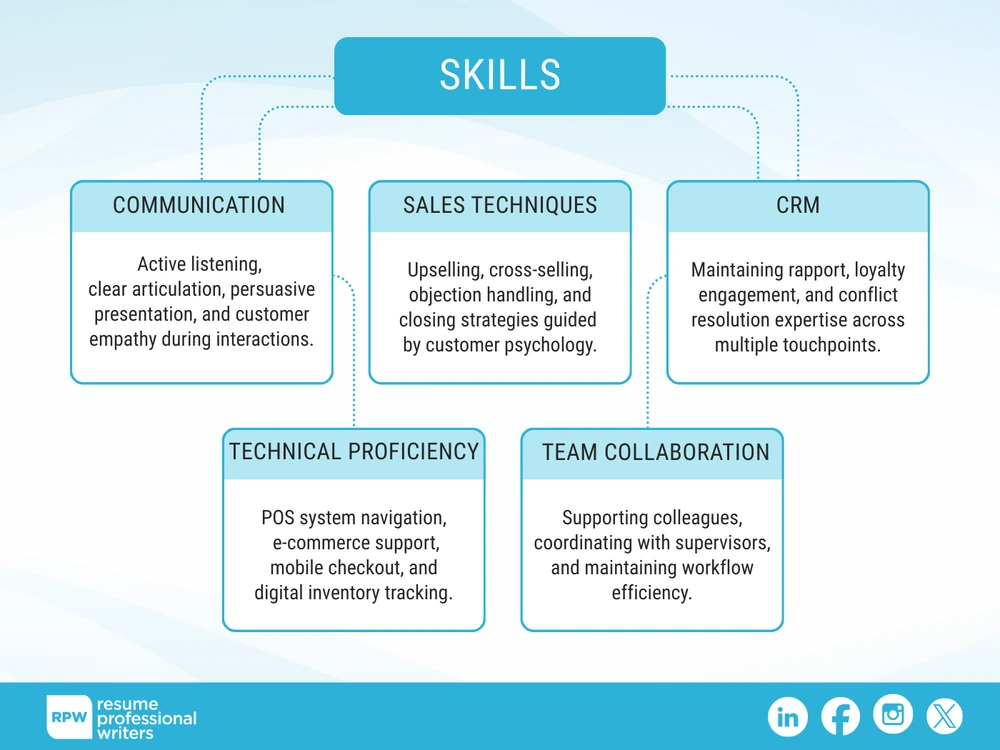
Top retailers increasingly value adaptability and continuous learning as new sales technologies emerge. Associates fluent in CRM software, barcode scanners, and AI-powered inventory tools often outperform peers on speed and customer engagement.
Equally important is emotional intelligence; customers remember positive, empathy‑driven interactions far more than transactional speed. This human touch is what transforms a simple sale into a lasting relationship.
Work Environments and Industries Hiring Sales Associates
What is a sales associate’s workplace like? The answer is as diverse as the industries that hire them. While retail remains the largest employer, opportunities also span hospitality, healthcare, technology, finance, and even e‑commerce. Understanding these environments helps candidates tailor resumes and interviews to match industry expectations.
Retail and Apparel
Clothing stores, department chains, and footwear outlets rely on sales associates for product demonstration and aesthetic merchandising. Success here often hinges on style knowledge, trend awareness, and the ability to create visually appealing displays.
Technology and Electronics
Associates provide technical assistance, guide device configuration, and drive accessory sales through solution-based selling. In this sector, product expertise and problem‑solving skills are critical to building customer trust.
Healthcare and Pharmaceuticals
Pharmacies and medical supply retailers employ associates to ensure compliance, patient confidentiality, and product accuracy. Precision and regulatory awareness define success in these roles.
Hospitality and Travel
Hotel gift shops, ticketing centers, and entertainment venues depend on associates for customer orientation and transaction support. Strong communication and service excellence are key differentiators in this fast‑paced environment.
E-commerce Platforms
Online retailers hire hybrid associates for chat-based support, returns, and live product consultations. These roles bridge digital and physical sales, requiring adaptability and tech fluency.
Modern workplaces emphasize cross-functional roles. For instance, associates within lifestyle brands often double as content promoters through social media campaigns, blending retail duties with digital marketing exposure. Similarly, grocery and convenience chains prioritize operational accuracy, requiring familiarity with health standards, restocking systems, and visual layout principles.
When exploring what is a sales associate’s role across industries, one truth stands out: versatility is the ultimate asset. Whether in retail, tech, healthcare, or hospitality, sales associates adapt to unique performance dynamics while consistently driving customer satisfaction and business success.
Average Salary and Job Outlook
What is a sales associate worth in today’s job market? As of 2025, sales associate compensation across the United States varies widely depending on company size, geographic location, and industry niche. According to the U.S. Bureau of Labor Statistics (BLS), the median pay for retail salespersons is approximately $34,700 annually, with top earners exceeding $50,000 when combining hourly wages, commissions, and performance bonuses. Specialized sectors—such as automotive, luxury retail, and technology—offer significantly higher earning potential.

Salary Structures and Incentives
Sales associates typically earn through hourly wages, often supplemented by commission incentives or sales contests. Pay scales shift based on location and market demand:
- Urban Centers: Cities like New York, San Francisco, and Los Angeles offer higher hourly rates to offset steep living costs.
- Suburban and Rural Markets: Salaries may be more modest but often balanced by flexible schedules and faster promotional opportunities.
- Seasonal Surges: Holidays and major retail events create temporary openings, ideal for students and part-time workers seeking extra income.
Job Outlook for Sales Associates
Despite automation and self-service technology reshaping parts of retail, the human element in personalized selling remains irreplaceable. Companies continue to prioritize relationship-driven experiences, ensuring steady demand for skilled associates across both physical and digital environments.
The BLS projects stable employment growth, especially in establishments offering experiential retail or service-based amenities that rely on interpersonal engagement. This role offers competitive pay, growth potential, and resilience in a changing market.
Career Growth and Advancement Opportunities
What is a sales associate’s career trajectory? Far more than just an entry-level role, the sales associate position serves as both an entry point and a professional development platform within the retail hierarchy. Through consistent performance and initiative, they acquire the business acumen essential for long-term career advancement.
Common Career Progression
Successful sales associates often progress into positions such as:
- Senior Sales Specialist – mastering advanced selling strategies and mentoring peers.
- Assistant Manager – overseeing daily operations and supporting leadership.
- Store Supervisor or Area Manager – managing teams, driving KPIs, and shaping regional performance.
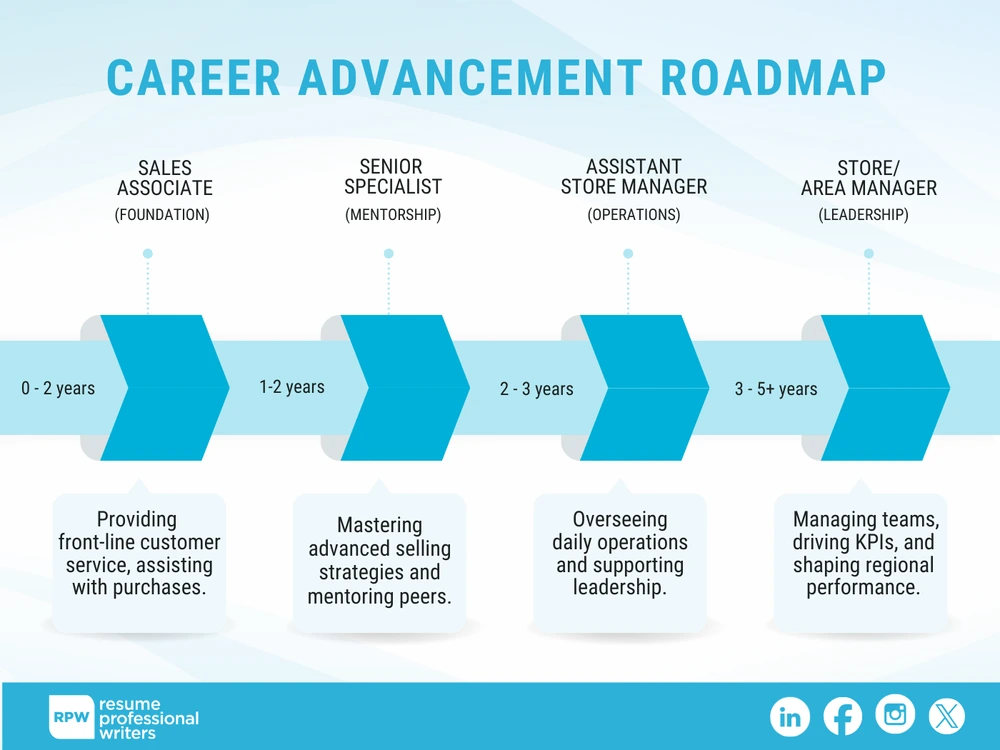
In addition to managerial progression, associates may branch into specialized divisions such as merchandising, corporate buying, or marketing support. For those aiming to transition into corporate careers, frontline experience provides transferable skills in communication, negotiation, CRM software, and strategic selling—valuable assets in business development, account management, and customer success sectors.
Pathways Beyond the Sales Floor
A sales associate’s experience nurtures foundational skills applicable across a wide range of industries. Leadership exposure gained from managing customers, coordinating with vendors, and executing strategies aligns well with supervisory and corporate progression. Combining hands-on retail experience with ongoing education makes candidates eligible for regional, national, or e-commerce management roles.
Professionals can pivot toward careers in:
- Account Management
- Hospitality Operations
- Public Relations
- Business Development
Many successful executives attribute their strategic mindset to lessons learned in early sales positions—where adaptability, empathy, and persuasion intersect daily. Through persistence and skill cultivation, even an entry-level sales associate’s journey can evolve into a fulfilling long-term career trajectory.
Training and Development Opportunities
Continuous learning is a cornerstone of career resilience. Many employers invest in their associates through structured programs, including:
- Product Education – deepening knowledge of merchandise and customer needs.
- Sales Analytics – learning data-driven strategies to improve conversion rates.
- Leadership Development – preparing associates for supervisory and managerial responsibilities.
National retail chains typically maintain performance-based promotion frameworks, rewarding sales achievements, attendance reliability, and customer feedback quality. Combined with external learning—such as workshops, certifications, or coursework in marketing and business management—these opportunities enhance employability and open doors to long-term success.
Education and Certifications
Most sales associate positions within the United States require a high school diploma or equivalent, though higher education enhances competitiveness. Coursework in marketing, business administration, or communications supports rapid promotion within structured retail organizations. Some employers also prioritize degrees when hiring for specialty or luxury sectors that involve complex product knowledge.
Professional certifications demonstrate motivation and reinforce credibility with employers. Recognized programs include:
- National Retail Federation (NRF) Professional Certification: Validates foundational retail knowledge from customer assistance to merchandising.
- Certified Professional Sales Person (CPSP): Offered by the National Association of Sales Professionals, focusing on advanced selling methodologies and ethics.
- Customer Service Excellence Certificate: Highlights proficiency in conflict resolution and loyalty development, applicable across industries.
Training in point-of-sale technology, digital commerce, and omnichannel inventory systems further distinguishes applicants in 2026’s job market. Employers increasingly expect fluency in technology platforms supporting interactions between online and brick-and-mortar environments. Combining certification with interpersonal aptitude provides a competitive edge for advancement negotiations and salary discussions.
How to Become a Successful Sales Associate

Becoming an effective sales associate requires dedication to both customer satisfaction and personal development. Employers reward professionals who demonstrate initiative beyond baseline job duties. The following strategies strengthen career positioning:
1. Focus on Relationship Building
Strong interpersonal bonds with repeat customers increase retention and referral potential, boosting overall store metrics.
2. Master Product Knowledge
Professionals who continuously learn about their inventory and market trends express confidence that resonates with buyers.
3. Leverage Technology
Demonstrating computer literacy by utilizing CRM systems, tablets, and social media integrates digital conversation into sales experiences, streamlines workflows, and improves overall efficiency.
4. Exceed Performance Goals
Consistent quota surpassing and documentation of sales results provide quantifiable data for promotion eligibility.
5. Request Feedback and Training
Constructive appraisal from supervisors leads to refinement of communication, closing skills, and leadership potential.
6. Prioritize Professional Appearance and Etiquette
Appropriate demeanor and attire enhance credibility, especially in luxury or corporate retail spaces.
7. Expand through Networking
Participation in retail associations or mentorship programs connects associates with future management mentors.
Modern retail leaders view self-improvement as an essential investment. Continuous learning initiatives, sales competitions, and digital competency training contribute to a professional’s upward mobility. Employees who demonstrate accountability and adaptability often advance rapidly due to retail’s fast-paced evolution toward personalized, data-driven selling environments.
Essential Resume and Interview Tips for Sales Associate Candidates
Breaking into or progressing within the retail sales industry starts with a strong application and confident interview performance. Hiring managers look for resumes and interviews that highlight measurable achievements, customer engagement, and teamwork excellence.
Resume Tips
To stand out in a competitive market, sales associate resumes should emphasize quantifiable results and transferable skills
- Show measurable achievements: Include revenue growth percentages, improved conversion rates, or customer satisfaction scores.
- Highlight transferable skills: Communication, problem‑solving, and conflict resolution are valuable across customer‑facing environments.
- Tailor keywords: Match resume language to job descriptions to pass ATS filters.
- Add a concise cover letter: Express enthusiasm for the brand and commitment to customer excellence to reinforce credibility.
Interview Recommendations
Interviews often test situational judgment and interpersonal skills. Candidates should prepare to demonstrate both professionalism and adaptability:
Candidates should prepare for behavioral questions like “Describe a time you resolved a difficult customer issue” or “How do you approach upselling without being pushy?” Response frameworks, such as STAR (Situation, Task, Action, Result), effectively organize answers. Practical role-play demonstrations may also be conducted to observe interpersonal communication and product knowledge under real scenarios.
- Behavioral questions: Expect prompts like “Describe a time you resolved a difficult customer issue” or “How do you approach upselling without being pushy?”
- Use the STAR method: Organize responses with Situation, Task, Action, and Result for clarity and impact.
- Role‑play exercises: Be ready for practical demonstrations that showcase communication skills, product knowledge, and customer interaction strategies.

Advance Careers Through Professional Support
Ready to elevate your career? Stand out in today’s competitive job market with keyword‑optimized resumes that pass ATS screenings and highlight measurable achievements. Showcase your value with precision—and gain the edge by partnering with professional resume writers who understand employer expectations, brand storytelling, and ATS compliance standards essential for 2026 and beyond. Start your career transformation today!
Frequently Asked Questions
What qualifications are needed to become a sales associate?
Most employers require at least a high school diploma, though additional education in business, marketing, or communications enhances advancement opportunities. Employers value hands-on experience, strong interpersonal skills, and reliability more than advanced degrees when hiring entry-level associates.
How much does a sales associate earn in 2026?
Based on the most recent data from the U.S. Bureau of Labor Statistics, average annual earnings for retail sales associates hover around $34,700, with commissions and bonuses significantly increasing total income depending on performance and location.
What are the main skills employers seek in sales associates?
Employers prioritize enthusiasm, communication ability, product knowledge, adaptability, and sales acumen. Technical familiarity with POS systems, mobile checkout tools, and CRM software also provides a competitive edge.
Can a sales associate experience lead to management roles?
Yes. Consistent achievement of sales targets, teamwork, and leadership initiative often lead to promotions toward assistant manager, shift leader, or store manager positions. Performance documentation is key to securing advancement.
Are remote or hybrid sales associate positions available?
Yes. The rise of e-commerce and virtual retail engagement allows associates to manage online customer chats, virtual consultations, and digital order processing, offering flexible remote options within the retail sector.